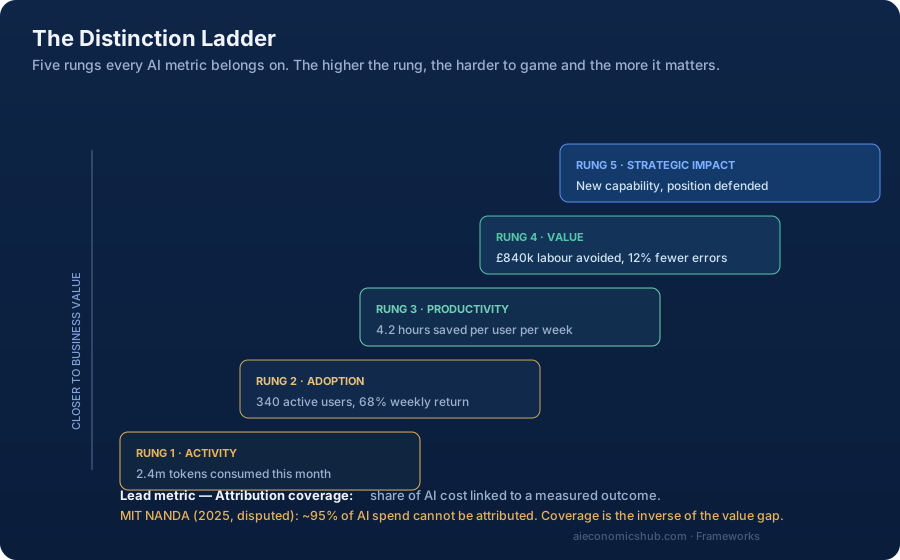

Adoption is one of the most overloaded and underspecified terms in AI governance. In most executive AI progress reports, "adoption" is used as a positive signal - high adoption suggests the AI capability is working. The problem is that adoption can mean at least four different things, each with different implications for what is actually being demonstrated.
Licence adoption measures what percentage of eligible users have been assigned access to the AI tool. This is an IT asset management metric. It says nothing about whether the tool is being used.
Active usage adoption measures what percentage of eligible users have actively used the tool in a defined period. This is more useful than licence adoption but still says nothing about whether usage is producing the intended outcome. An employee who opens an AI writing assistant once per week and immediately closes it has been counted as an active user.
Feature adoption measures whether users are engaging with the specific features that create the intended value. A coding assistant is most valuable when used for code generation and review; a high adoption rate driven primarily by documentation search does not validate the value case that justified the investment.
Workflow adoption measures whether the AI capability has changed how users work, not merely whether they have accessed the tool. This is the most relevant measure for value capture but the hardest to measure, because it requires observation of behaviour change rather than system access logs.
Finance leaders should ask specifically which definition of adoption is being used in AI performance reports, and treat licence-level or usage-level adoption metrics as process indicators rather than as evidence of value realisation.