

Library
51 maintained pieces on AI cost, value, decisions and the operating model. Every figure links to its source, and claims are labelled as evidence or interpretation.
Start with these
Six pieces that carry the argument, each checked against its sources. Read them in this order.
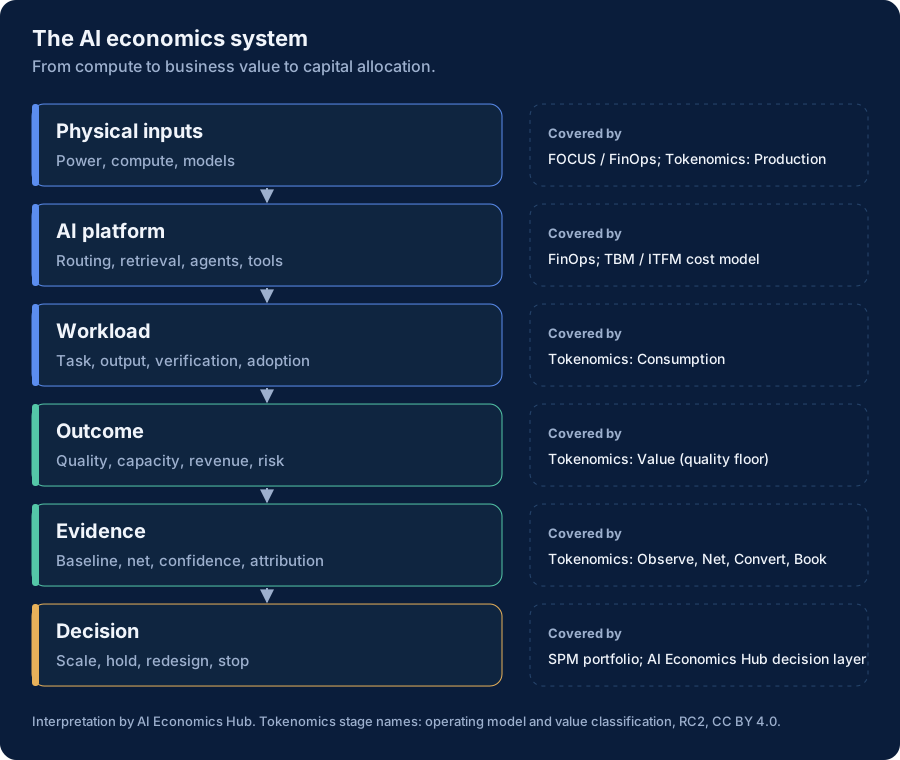
- 1The AI Economics Map: From Compute to Business Value to Capital AllocationFramework · 7 min
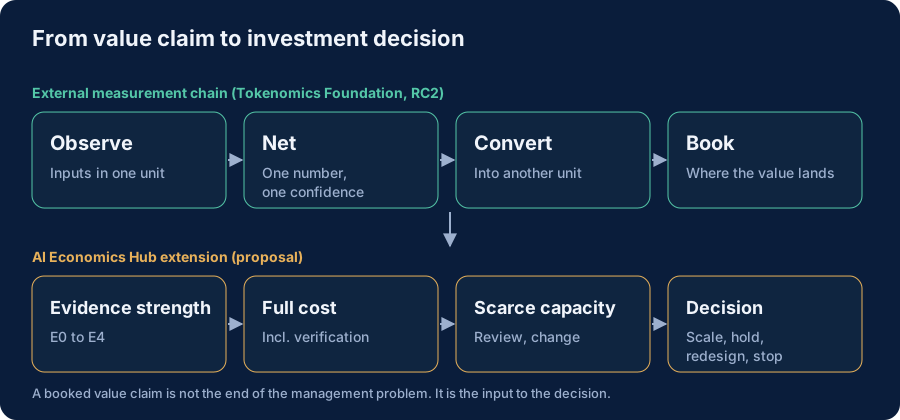
- 2How to Measure AI Value: From Observed Change to a Defensible Investment DecisionGuide · 7 min
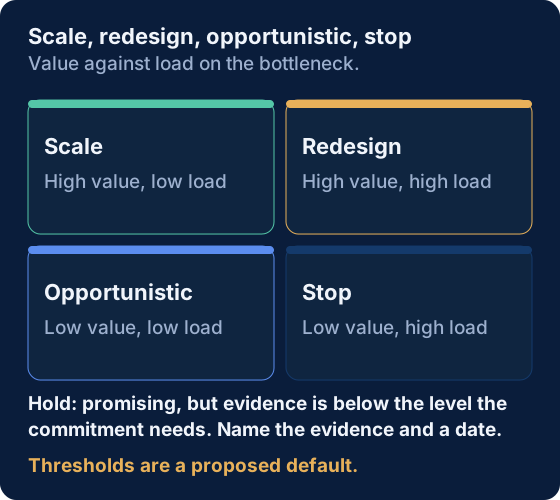
- 3Scale, Hold, Redesign, Stop: Decision Rules for AI InvestmentFramework · 3 min
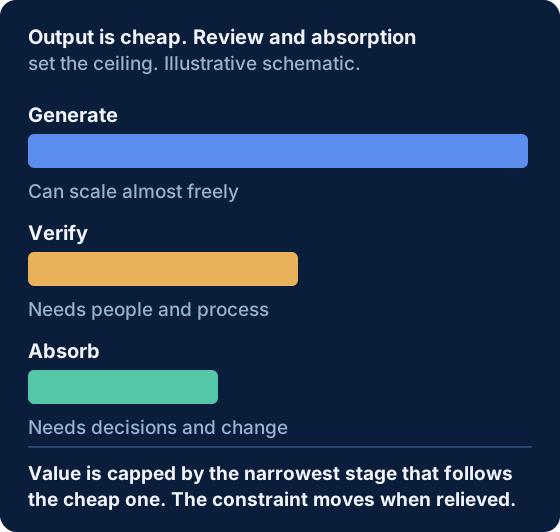
- 4The AI Abundance ParadoxFramework · 10 min
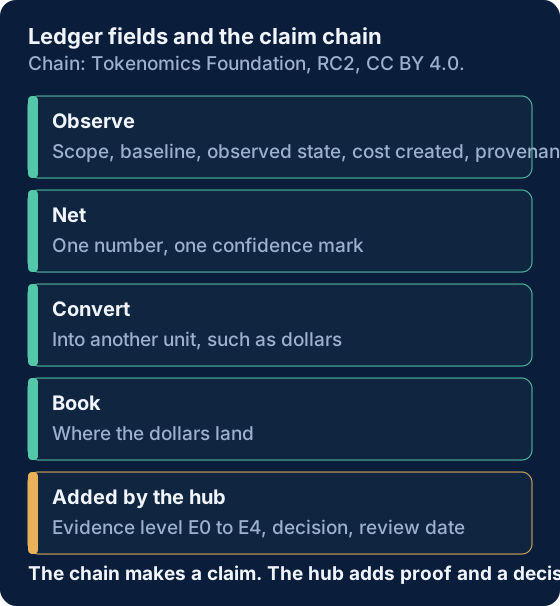
- 5The AI Value LedgerFramework · 8 min
- 6What CFOs Should Ask of AI ROI ClaimsGuide · 14 min
The library
Ordered by the most recent review or publication. Reviewed pieces show the date they were last checked against sources.
51 pieces
Guide · Cost and pricing
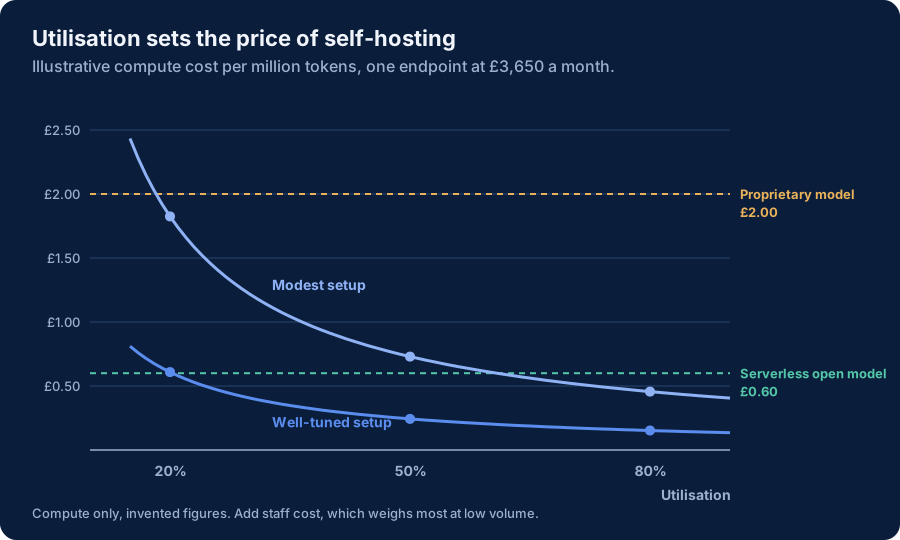
How Inference Choices Change AI Cost: A Guide for Budget Owners
Batching, latency targets, serverless or dedicated hosting, open-weight models, serving engines and quantisation: what each does to the AI bill, and when self-hosting pays.
15 minReviewed 15 Oct 2026For CFO, FinOps, budget owners
Essay · Value and proof
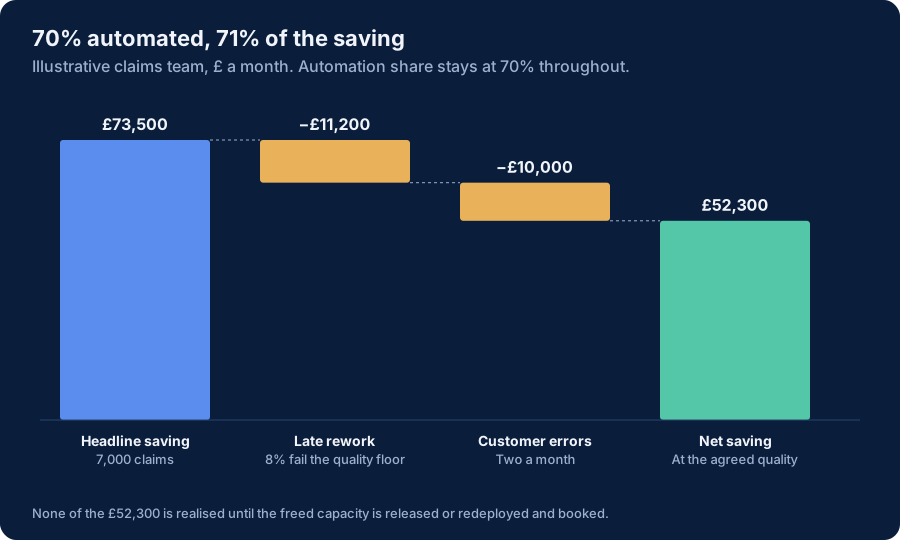
Automation Share Is Not Value
Measuring AI value by the share of work done without people rewards removal, not value. What the Tokenomics Foundation's first measure needs alongside it.
6 minReviewed 15 Oct 2026For CFO, CAIO, FinOps, standards bodies
Essay · Cost and pricing
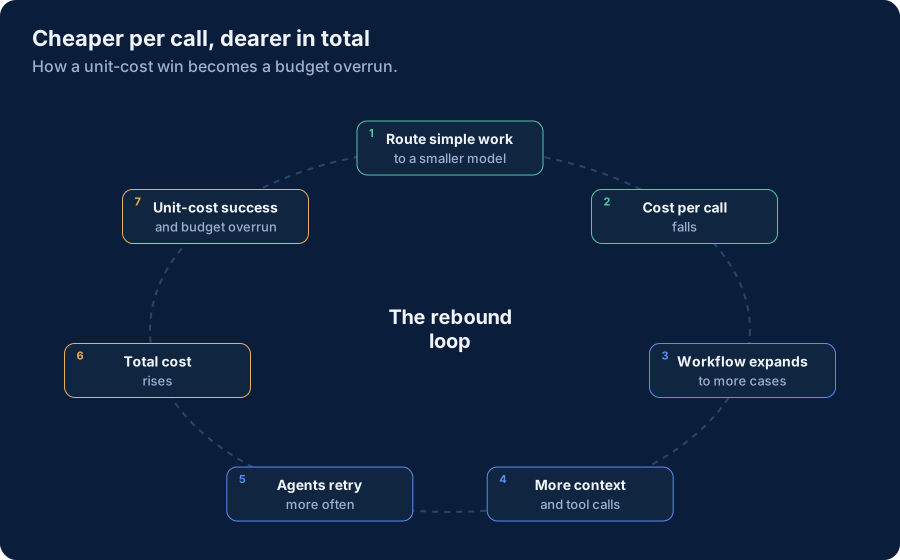
Why Cheaper AI Will Cost More
Falling token prices do not mean falling AI budgets. How demand, reasoning and agents outgrow price cuts, and how to forecast and stress-test the bill.
9 minReviewed 15 Oct 2026For CFO, CIO
Reference · Cost and pricing
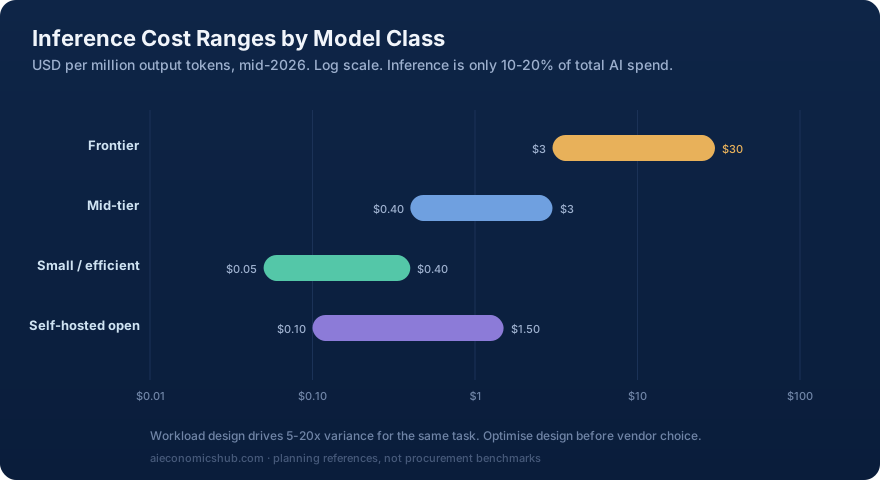
What AI Actually Costs: Reference Cost Ranges for Enterprise AI
Reference cost ranges for each layer of enterprise AI spend, from inference and platform fees to governance and integration. A starting point for planning.
11 minReviewed 15 Oct 2026For CFO, FinOps
Essay · Cost and pricing
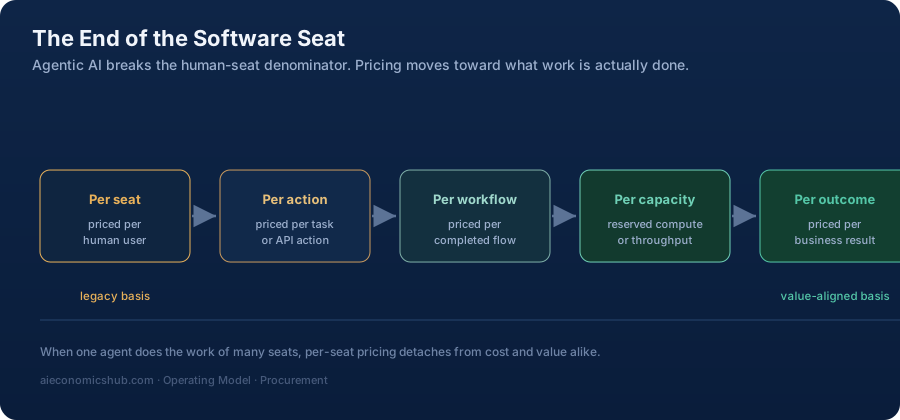
The Seat Is No Longer the Only Meter: How Agents Change Software Pricing
Agents break the link between seats and work. How software pricing is moving to hybrid models, and why outcome pricing can hand your gains to the vendor.
7 minReviewed 12 Oct 2026For Procurement, CFO
Template · Decisions and governance
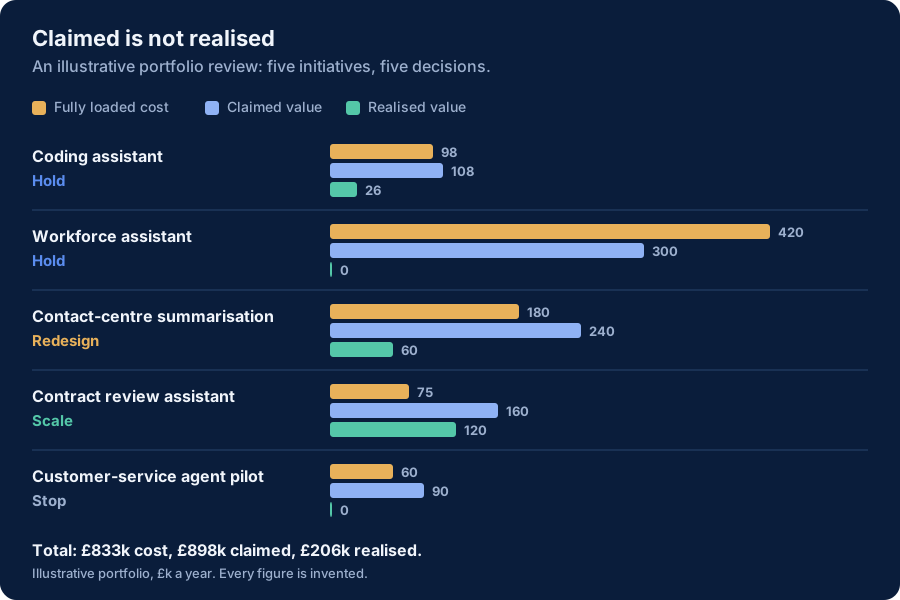
The AI Portfolio Review Pack
A monthly and quarterly review that turns AI initiatives into scale, hold, redesign or stop decisions. With an Excel template, agenda and worked portfolio.
6 minReviewed 12 Oct 2026For CFO, CAIO, value office
Guide · Cost and pricing
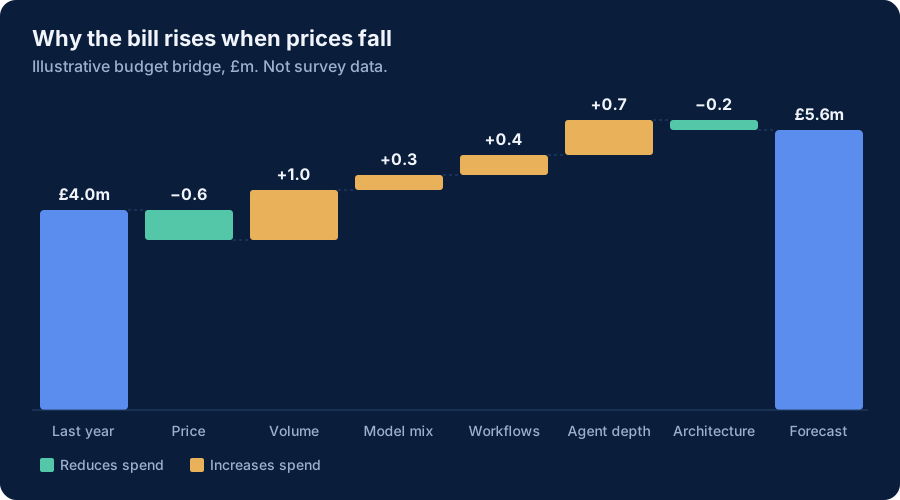
How to Budget for AI When Unit Prices Fall and Total Spend Rises
A driver-based method for forecasting AI spend, splitting variance into price, volume, mix and agent-depth effects, and seven scenarios to run first.
5 minReviewed 12 Oct 2026For CFO, FP&A, ITFM
Essay · Operating model
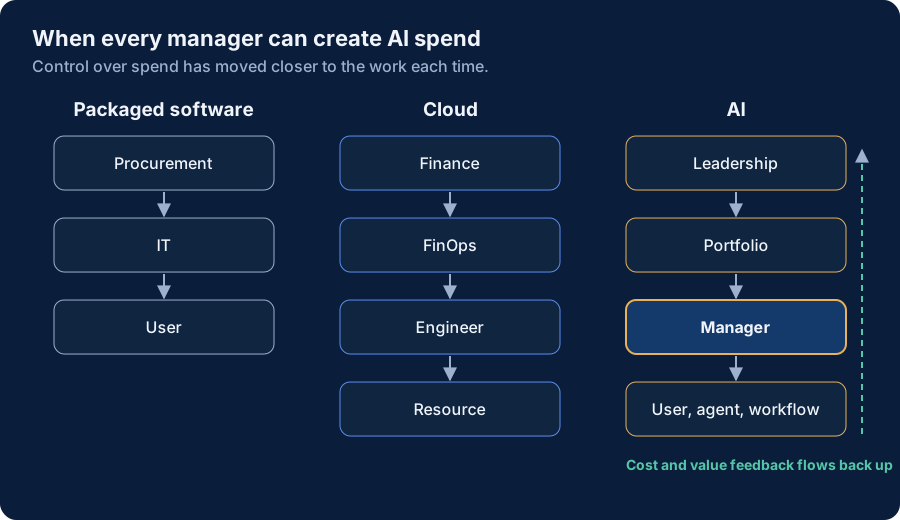
When Every Manager Can Create AI Spend
Usage-based AI moves control of technology spend from procurement and IT to line managers, teams and their agents. What that means for budgets and guardrails.
5 minReviewed 12 Oct 2026For CFO, line managers
Framework · Decisions and governance
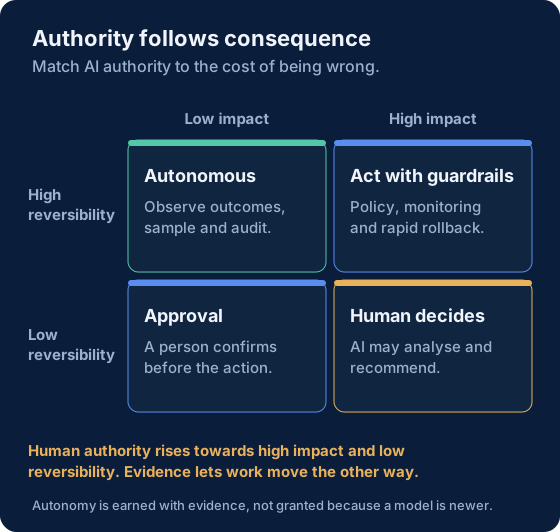
How Much Proof for How Much Autonomy
Autonomy should be earned with evidence. Each rung of an autonomy ladder paired with the evidence needed to climb it, scaled to impact and reversibility.
4 minReviewed 12 Oct 2026For CIO, CAIO, risk
Framework · Cost and pricing
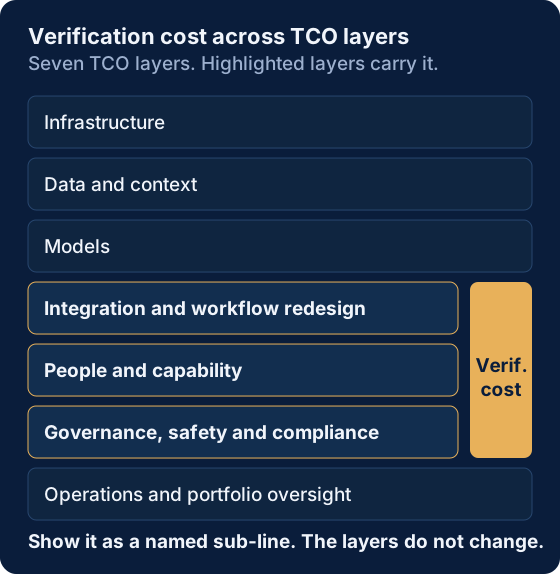
The Cost of Verification
Review, triage, rework and escalation are a growing part of AI total cost, and most cost models bury them. This essay proposes making them explicit.
4 minReviewed 12 Oct 2026For CFO, FinOps
Essay · Cost and pricing
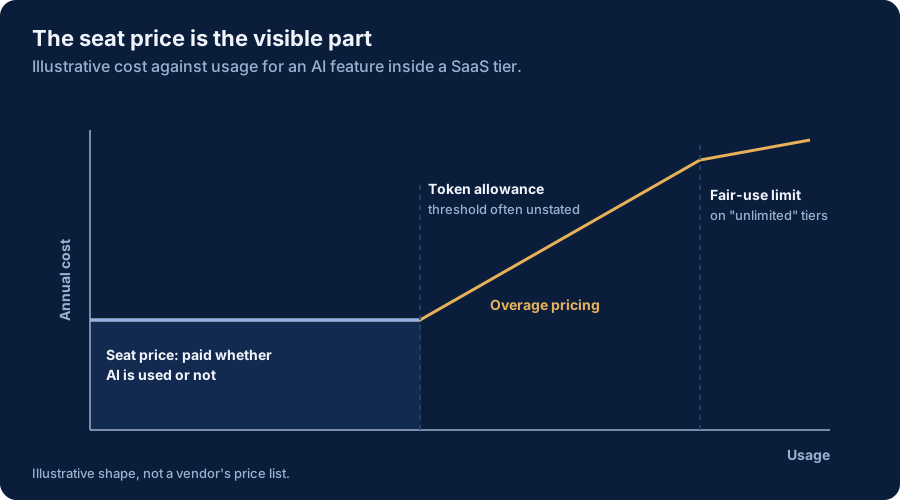
Embedded AI, Hidden Tokens: Why SaaS Pricing Obscures AI Economics
How AI bundled into SaaS subscriptions hides token consumption and creates procurement blind spots. A guide for CFOs and procurement leaders.
12 minReviewed 12 Oct 2026For Procurement, FinOps
Case file · Decisions and governance
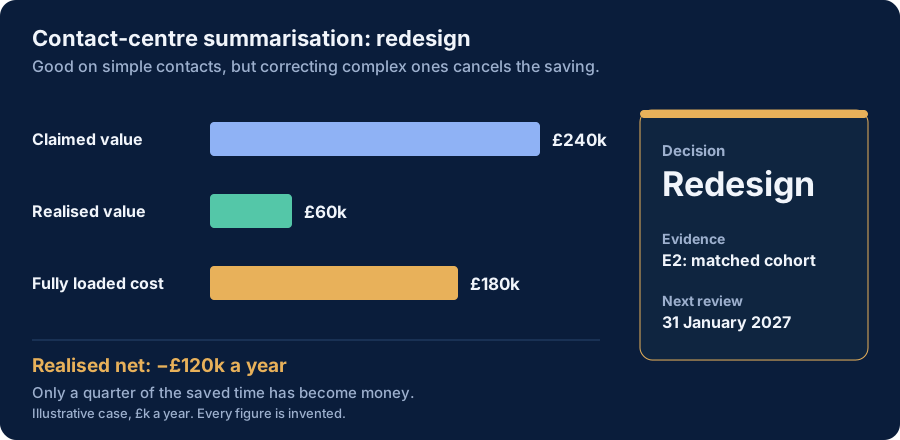
Case: Contact-Centre Summarisation (Redesign)
Illustrative case. Call summarisation helps on simple contacts, but correcting complex ones cancels most of the saving. Decision: redesign, then decide again.
4 minPublished 8 Oct 2026For CFO, customer operations
Case file · Decisions and governance
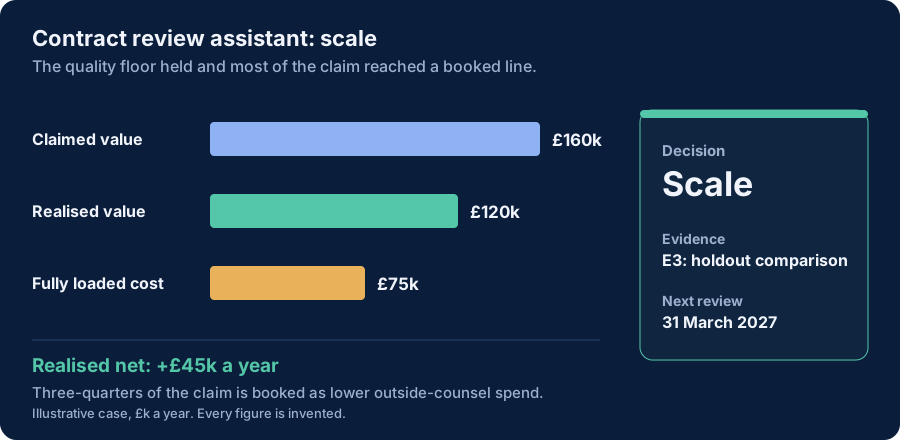
Case: Contract Review Assistant (Scale)
Illustrative case. A holdout comparison showed contract review assistance cleared its quality floor and turned most claimed value into booked savings. Scale.
4 minPublished 8 Oct 2026For CFO, legal, CAIO
Case file · Decisions and governance
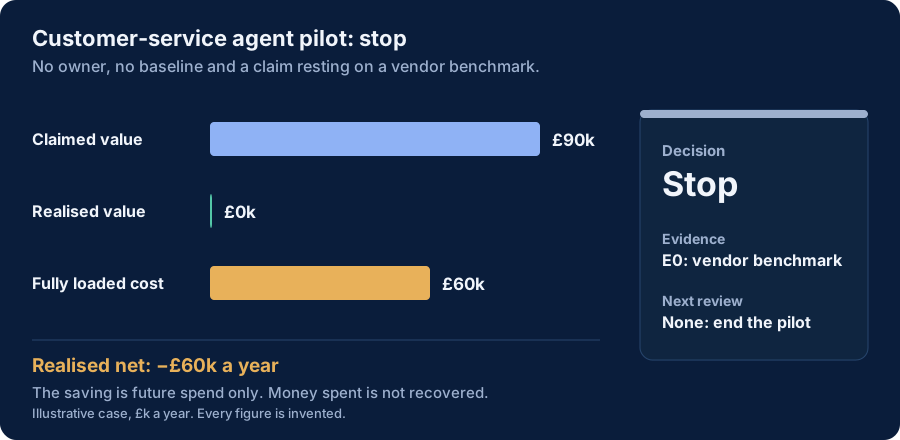
Case: Customer-Service Agent Pilot (Stop)
Illustrative case. An autonomous service agent pilot had no owner, no baseline and a vendor-demo benchmark. Decision: stop and keep what is reusable.
4 minPublished 8 Oct 2026For CFO, CIO, CAIO
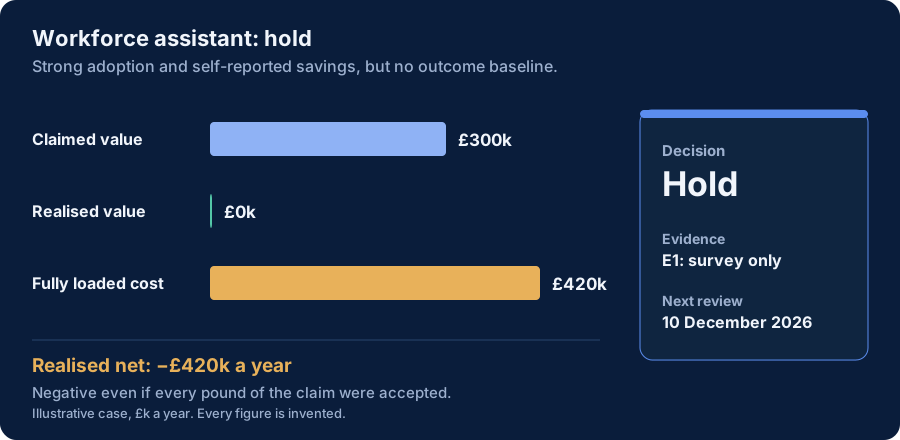
Case file · Decisions and governance
Case: Workforce Assistant (Hold)
Illustrative case. A company-wide assistant has strong adoption and self-reported time savings, but no outcome baseline. Decision: hold and fund the evidence.
3 minPublished 8 Oct 2026For CFO, COO, CAIO
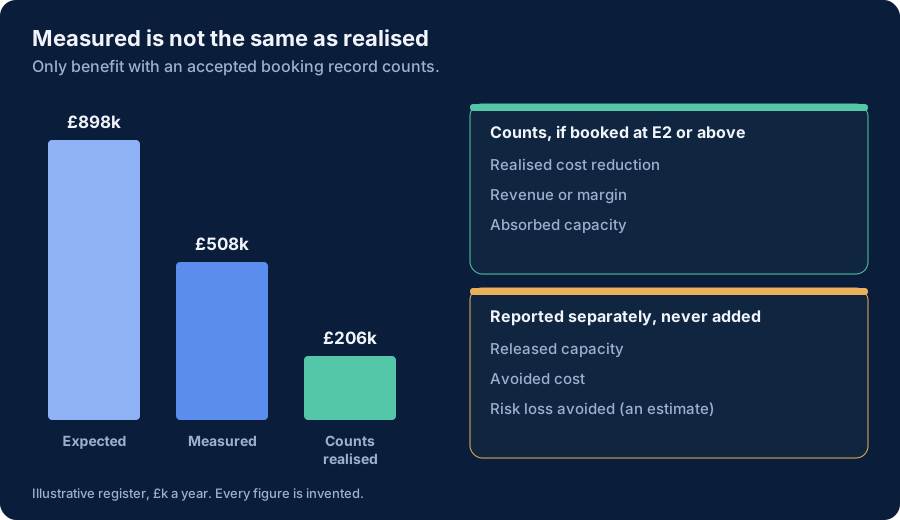
Template · Value and proof
The AI Benefits Register
Keeping realised, absorbed, released and avoided benefit apart, so only value with an accepted record is counted. With an Excel template and worked example.
4 minPublished 8 Oct 2026For CFO, finance partner, value office
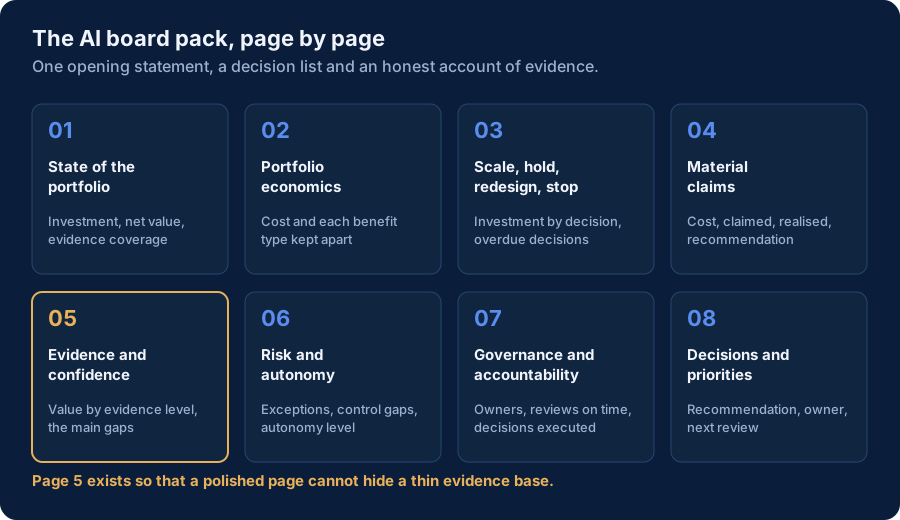
Template · Decisions and governance
The AI Board Reporting Pack
A board pack, one-page dashboard, audit committee supplement, decision memo and question bank for governing AI investment, value and risk. Word template.
4 minPublished 8 Oct 2026For CFO, CIO, board
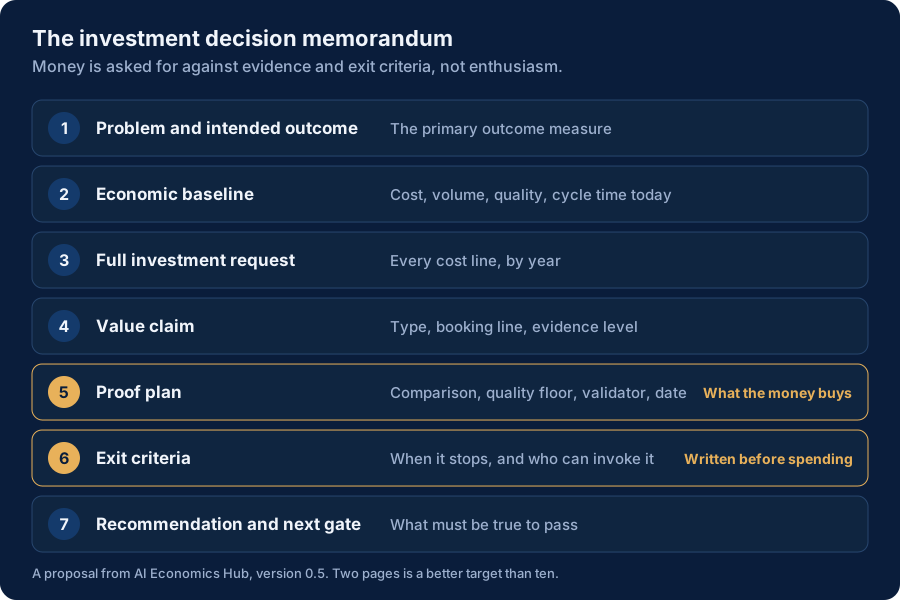
Template · Decisions and governance
The AI Investment Decision Memorandum
A seven-part memo for a material AI funding request: problem, baseline, full cost, value claim, proof plan, exit criteria and next gate. Word template.
3 minPublished 8 Oct 2026For CFO, CIO, business owners
Template · Cost and pricing
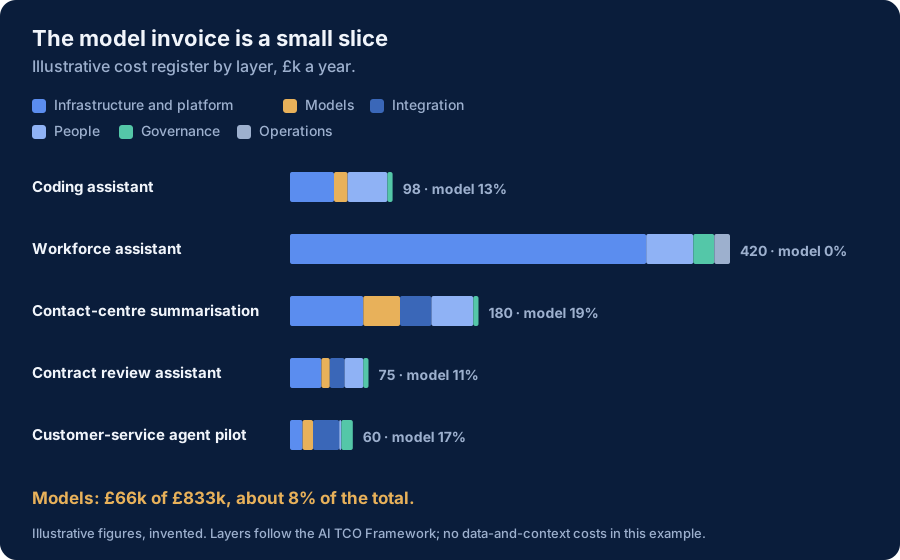
The AI Portfolio and Cost Register
The inventory every AI value artefact depends on: a register of initiatives, tools and agents with owners, and a seven-layer cost register. Excel template.
4 minPublished 8 Oct 2026For CFO, FinOps, value office
Template · Decisions and governance
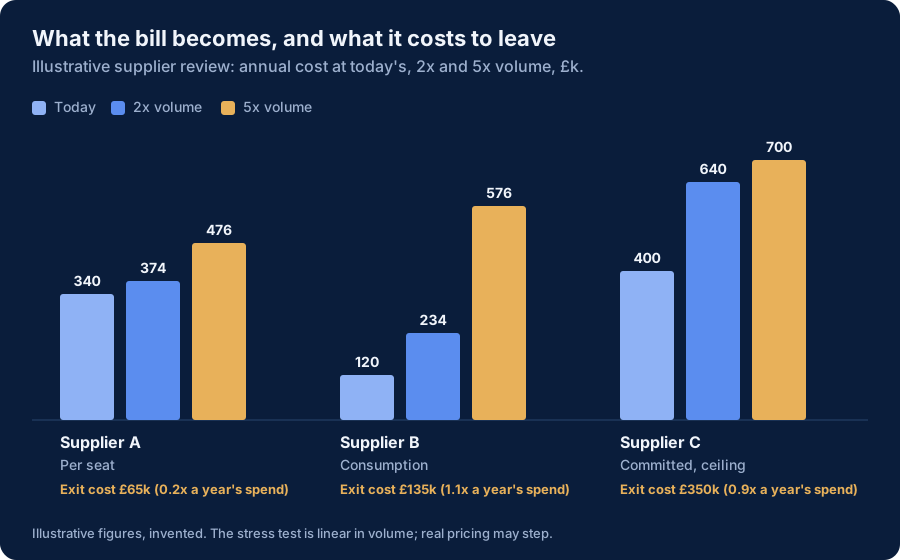
The AI Supplier Economics Review
Reviewing an AI supplier contract on pricing risk, lock-in, consolidation exposure and governance fit. With a twelve-term checklist and an Excel template.
4 minPublished 8 Oct 2026For CFO, procurement, CIO
Framework · Decisions and governance
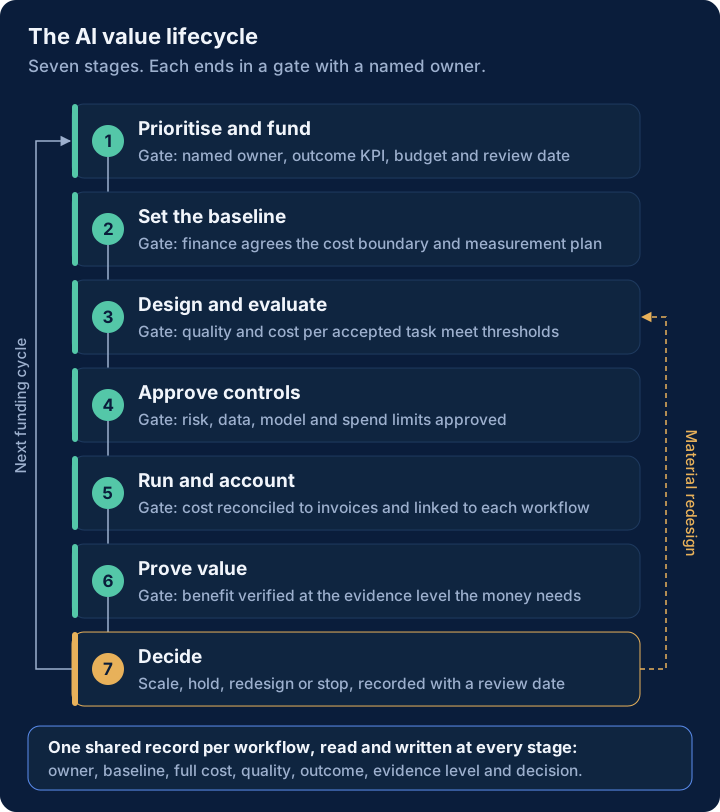
The AI Value Lifecycle: Seven Gates from Funding to Decision
When each AI value decision is made, who owns it and what evidence it needs: seven stages from funding to a decision, with a separate path for bought AI.
8 minReviewed 8 Oct 2026For CFO, CIO, CAIO, value office
Template · Operating model
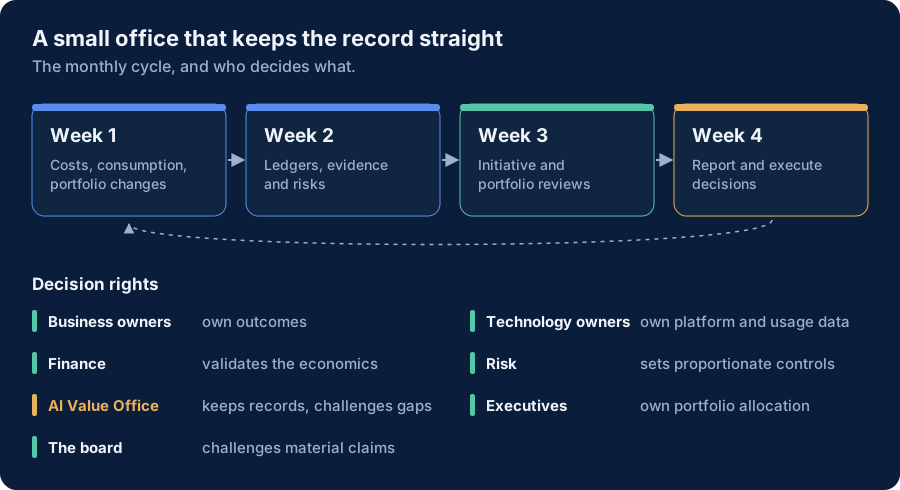
The AI Value Office Charter
A charter template for the small team that joins up AI cost, evidence, governance and portfolio decisions: mandate, roles, decision rights and review cycle.
3 minPublished 8 Oct 2026For CFO, CIO, CAIO
Guide · Operating model
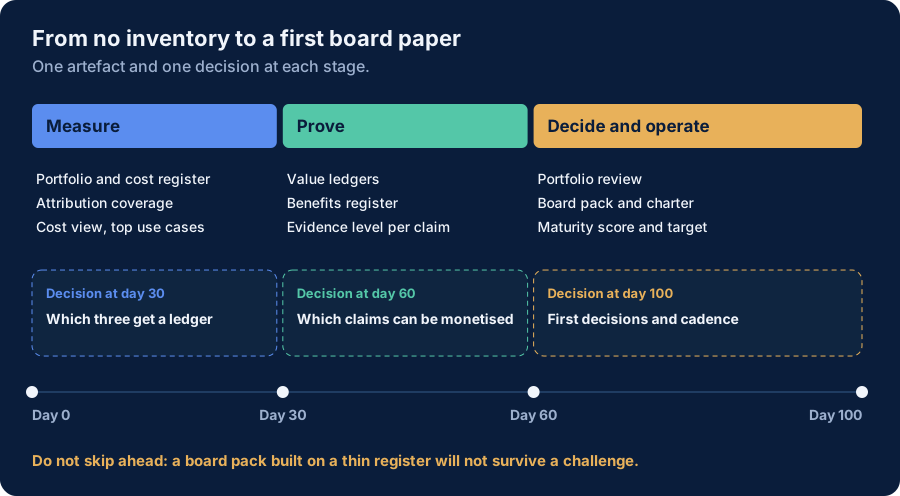
The First 100 Days of AI Value Management
How to start AI value management: a week-by-week first month, then a plan to a first portfolio review, board pack and operating model in 100 days.
9 minPublished 8 Oct 2026For CAIO, CFO, value office
Template · Decisions and governance
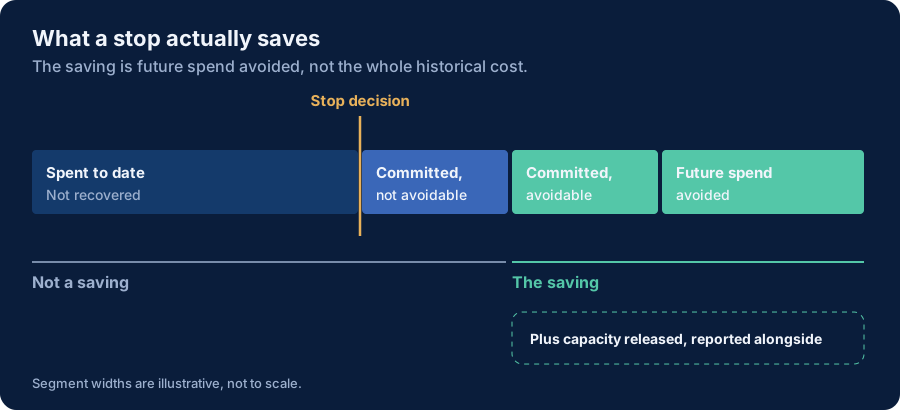
The Stopped Initiative Review
A short record for a stopped AI initiative: what it cost, why it ended, what was learned, what can be reused and what would justify a retry. Word template.
3 minPublished 8 Oct 2026For CFO, CAIO, value office
Guide · Decisions and governance
What CFOs Should Ask of AI ROI Claims
Most AI ROI cases are built to survive scrutiny, not invite it. What a credible AI business case looks like, and why CFOs should insist on the difference.
14 minReviewed 7 Oct 2026For CFO
Guide · Value and proof
How to Measure AI Value: From Observed Change to a Defensible Investment Decision
The steps between 'it saved time' and ROI: a baseline, a quality floor, netting out rework, converting with care, then deciding. With three worked examples.
7 minPublished 7 Oct 2026For CFO, FinOps, value office
Framework · Value and proof
The AI Economics Map: From Compute to Business Value to Capital Allocation
One map of how AI resources become business outcomes and funding decisions, showing what external standards cover and where leadership judgement begins.
7 minPublished 7 Oct 2026For CFO, CIO, CAIO
Guide · Cost and pricing
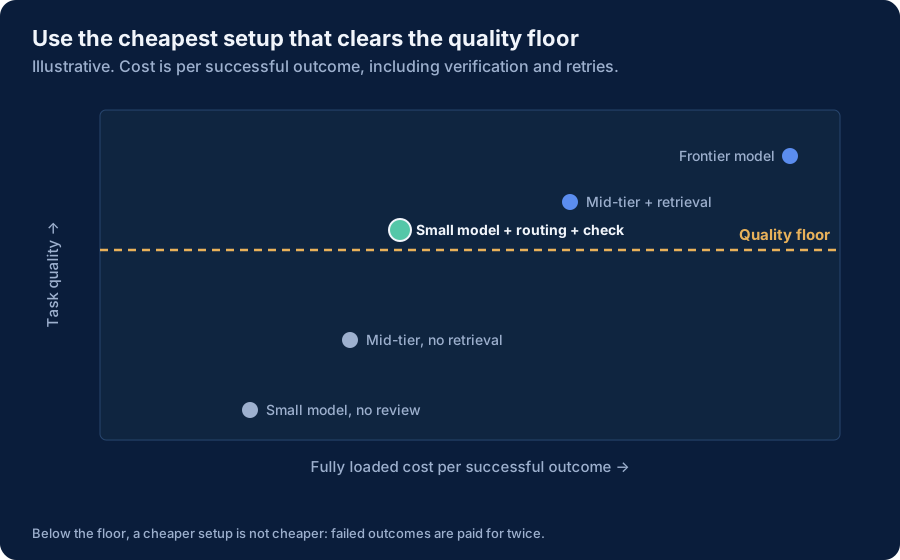
The Economics of Model Selection: Use the Cheapest Setup That Clears the Quality Floor
Why 'which model is best?' is the wrong question: compare setups on cost per successful outcome, and see where routing, caching and human checks fit.
4 minPublished 7 Oct 2026For CTO, product, platform
Guide · Value and proof
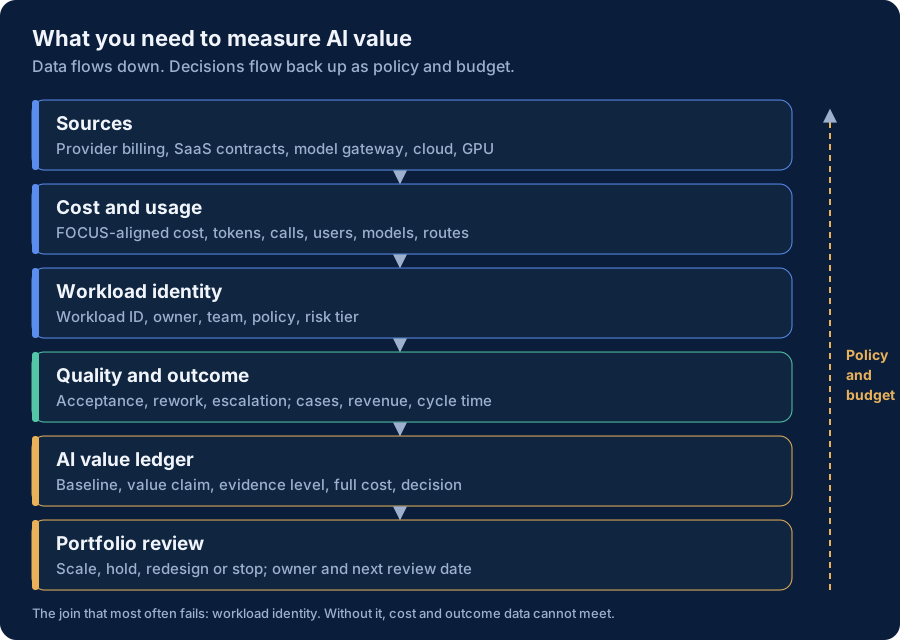
What You Actually Need to Measure AI Value: The Instrumentation Blueprint
The cost, usage, quality, outcome and portfolio data AI value measurement needs, where each comes from, and the join that often breaks: workload identity.
4 minPublished 7 Oct 2026For FinOps, platform, data
Guide · Operating model
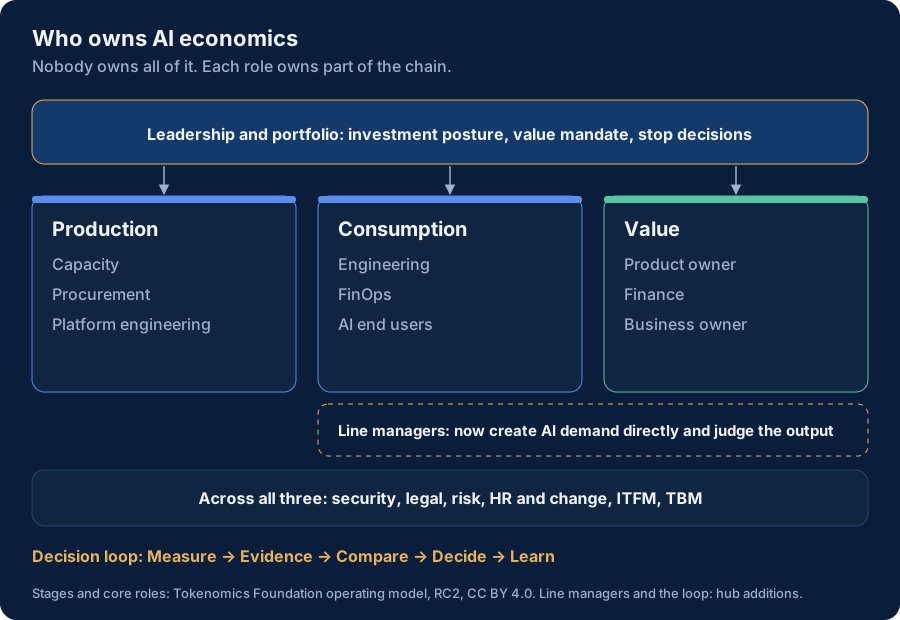
Who Owns AI Economics? A Federated Operating Model for Cost, Value and Control
Nobody owns all of AI economics. A federated operating model that connects the roles already holding each part, with a RACI for fourteen recurring decisions.
6 minPublished 7 Oct 2026For CIO, CFO, FinOps
Evidence
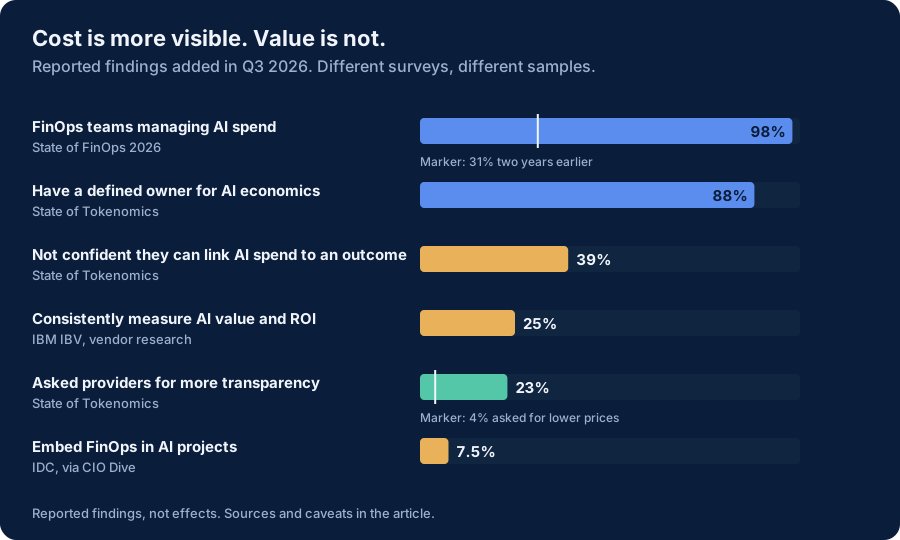
Evidence Review, Q3 2026
What new evidence on AI cost and value arrived in Q3 2026, what it means for this publication's positions, and what we changed on the site as a result.
4 minReviewed 7 Oct 2026For All
Framework · Value and proof
The AI Abundance Paradox
When generating work is cheap, the constraint moves to verifying and absorbing it. AI value is then capped by review, decision and change capacity.
10 minReviewed 7 Oct 2026For CFO, CIO, CAIO
Framework · Value and proof
The AI Value Ledger
A small operating record for each material AI workflow, treating value evidence like financial evidence: owner, baseline, costs, outcomes, evidence, decision.
8 minReviewed 7 Oct 2026For CFO, FinOps, value office
Evidence
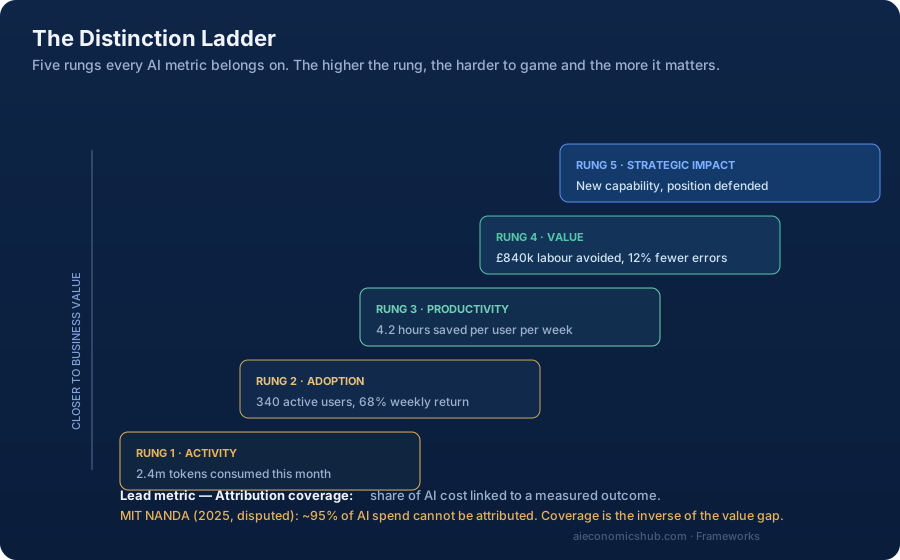
What the Engineering Evidence Says About AI Coding Value
Studies of AI coding assistants point different ways. Task speed, delivery performance and perceived productivity differ, so check which one a claim rests on.
5 minReviewed 7 Oct 2026For CFO, CTO
Essay · Cost and pricing
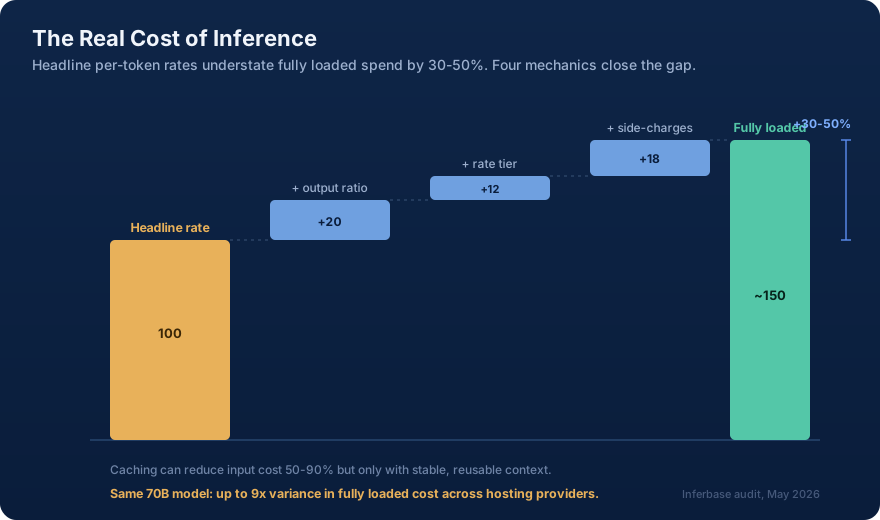
What Cloud Taught Us About the Real Cost of AI Inference
Why per-token rates understate enterprise inference bills, what rate cards miss, and how finance and FinOps leaders can estimate fully loaded inference cost.
9 minReviewed 6 Oct 2026For CFO, FinOps
Framework · Decisions and governance
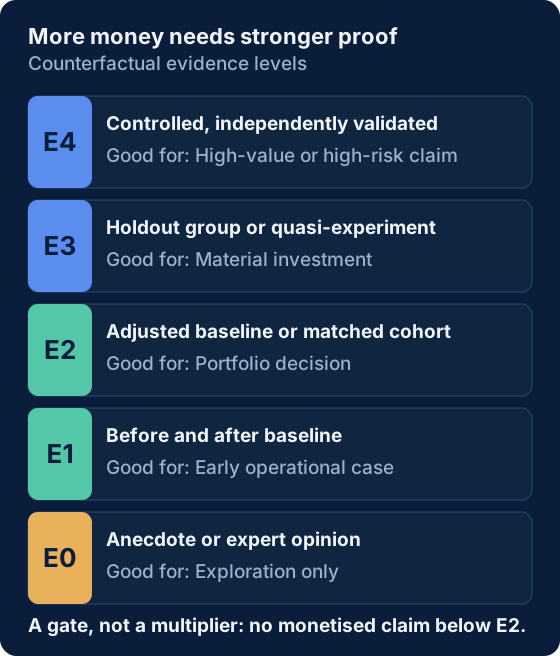
Scale, Hold, Redesign, Stop: Decision Rules for AI Investment
A practical set of decision rules for a CFO or CIO reviewing AI workflows, combining return on scarce capacity with the evidence level behind each claim.
3 minPublished 6 Oct 2026For CFO, CIO
Reference · Cost and pricing
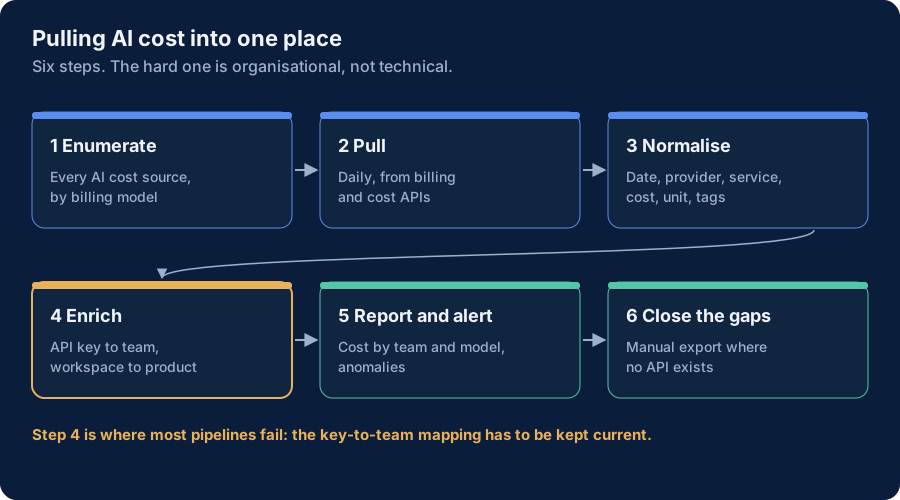
Programmatic Access to AI Costs: A FinOps Practitioner's Billing API Guide
How FinOps and platform teams can pull AI cost data from model providers, hyperscalers and coding tools, what is missing, and a minimal aggregation pipeline.
12 minReviewed 6 Oct 2026For FinOps, engineering
Guide · Value and proof
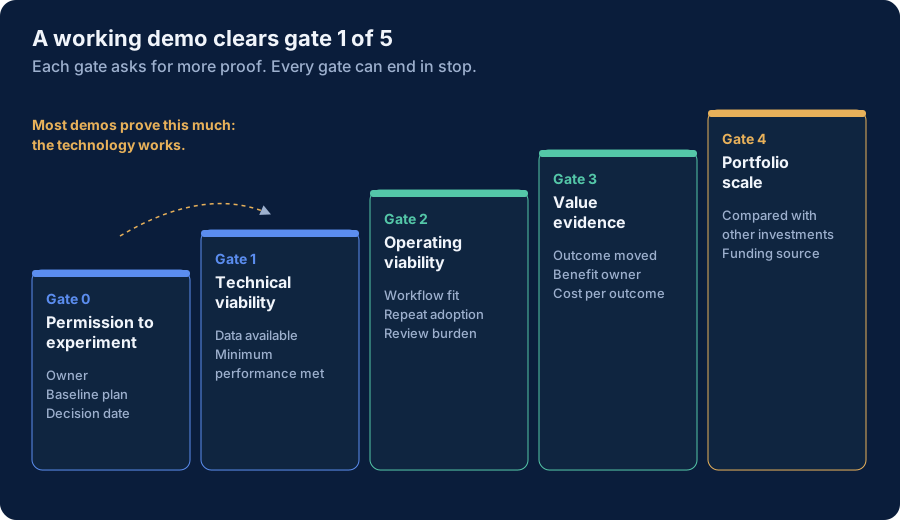
A Proof of Concept That Proves the Technology Has Proved Almost Nothing
Technical feasibility is not evidence of business value. An AI pilot must prove cost, workflow change, adoption, risk and value capture.
7 minPublished 12 Jun 2026For CFO, CAIO
Essay · Operating model
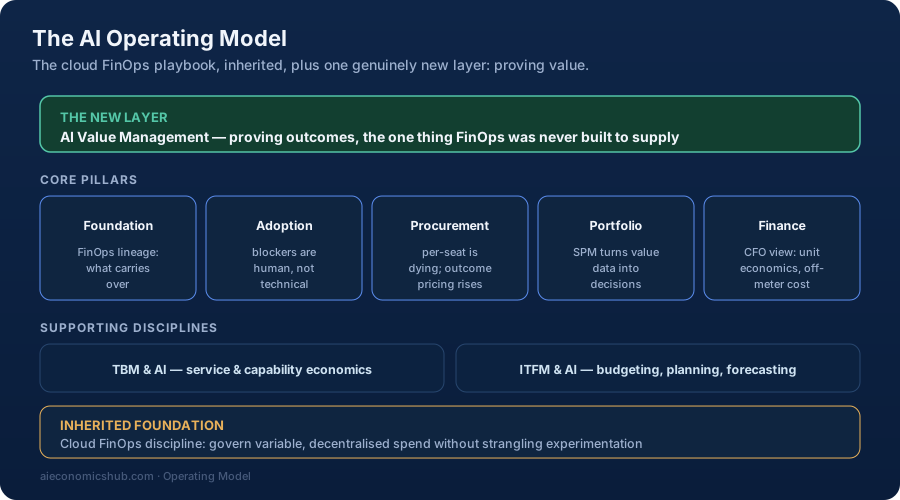
FinOps for AI Is Necessary, Not Sufficient: Where AI Value Management Takes Over
FinOps for AI makes AI spend visible and efficient. Turning it into growth and protected earnings needs decisions FinOps hands off to finance and the business.
17 minPublished 12 Jun 2026For CFO, CIO, FinOps
Essay · Cost and pricing
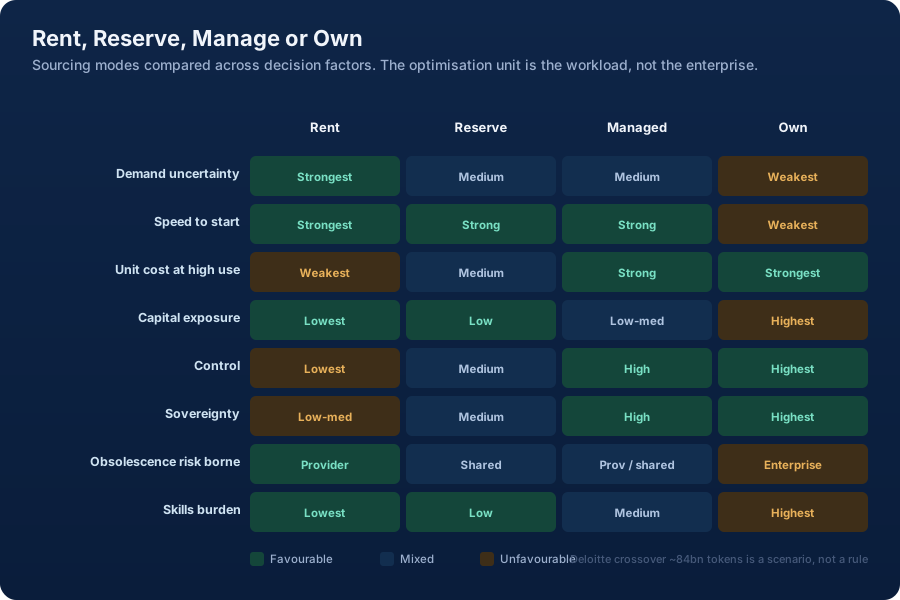
Rent, Reserve or Own Intelligence?
A decision framework for API, committed capacity, neocloud, private and owned AI infrastructure.
6 minPublished 12 Jun 2026For CIO, CTO
Essay · Value and proof
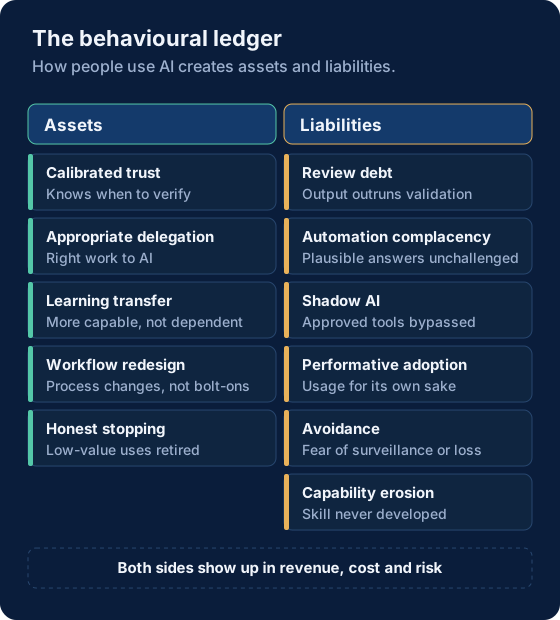
The Behavioural P&L of AI
AI adoption changes trust, review, learning, workarounds and decision behaviour. Those effects create real economic assets and liabilities.
6 minPublished 12 Jun 2026For CFO, HR, CIO
Essay · Operating model
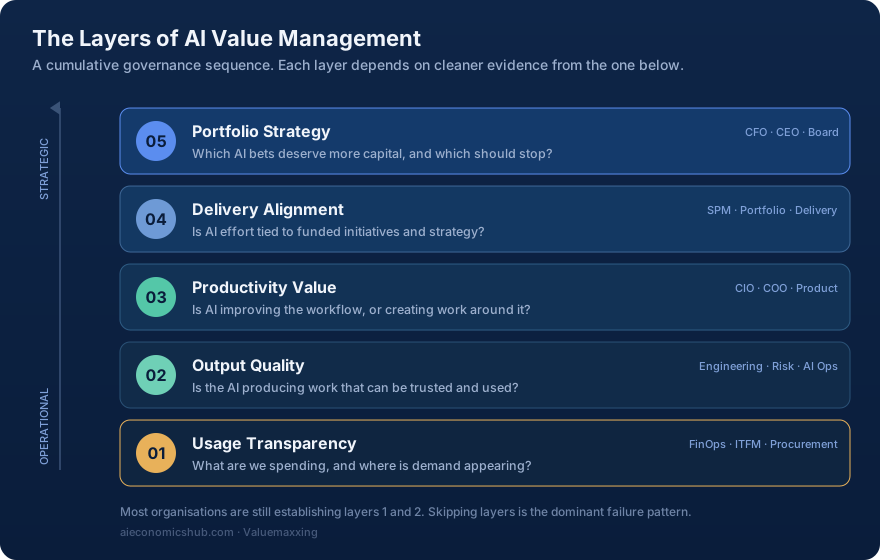
The CIO Can Orchestrate AI Value, but Cannot Own It
AI value needs a federated operating model. Technology leaders can orchestrate evidence and platforms, but business executives must own outcomes.
4 minPublished 12 Jun 2026For CIO
Essay · Value and proof
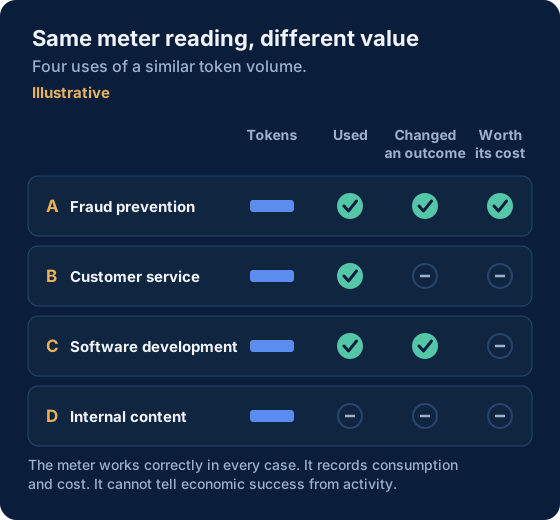
The Token Is the Meter, Not the Value
Tokens make AI consumption measurable and priceable. They do not tell an organisation whether anything valuable happened.
8 minPublished 12 Jun 2026For CFO, FinOps
Essay · Operating model
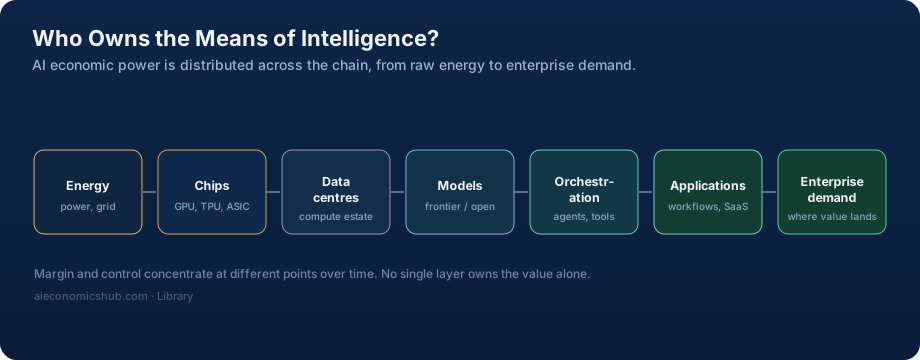
Where Power Sits in the AI Value Chain
AI economic power runs from energy and chips to models, applications and demand. Which layers capture margin, and what that means for a buyer's leverage.
5 minPublished 12 Jun 2026For CIO, CEO
Guide · Decisions and governance
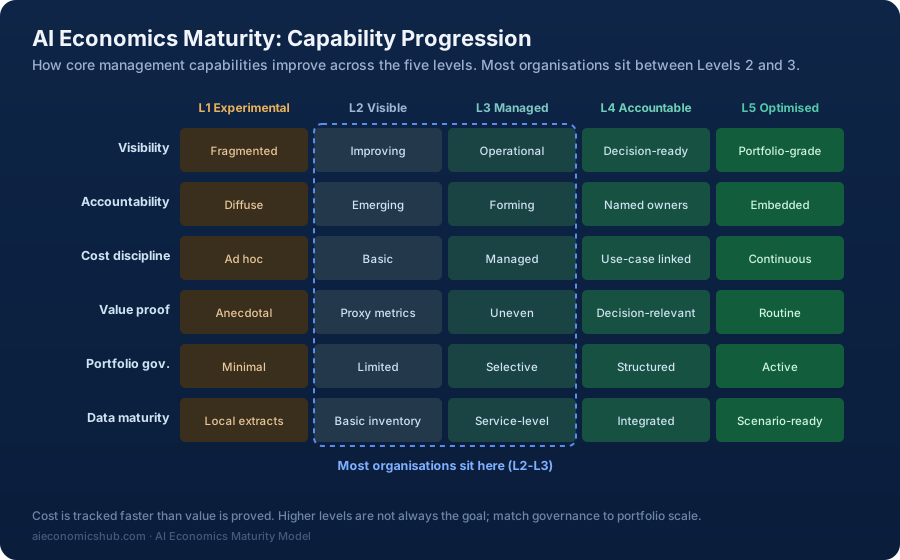
What Boards and Audit Committees Should Actually Ask About AI
Board AI conversations are often too strategic or too tactical. What economic oversight needs: capital discipline, value proof and investment accountability.
10 minPublished 11 Jun 2026For Board, audit committee
Essay · Decisions and governance
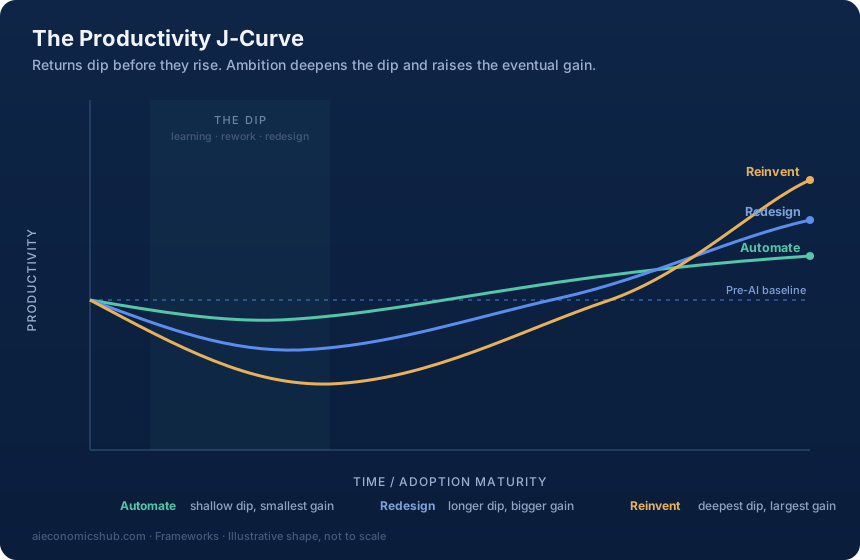
When to Stop an AI Initiative
Organisations stop AI work often, but by attrition rather than rule. Why underperforming initiatives persist, and how to set exit criteria in advance.
14 minPublished 11 Jun 2026For CFO, portfolio leads
Case file · Value and proof
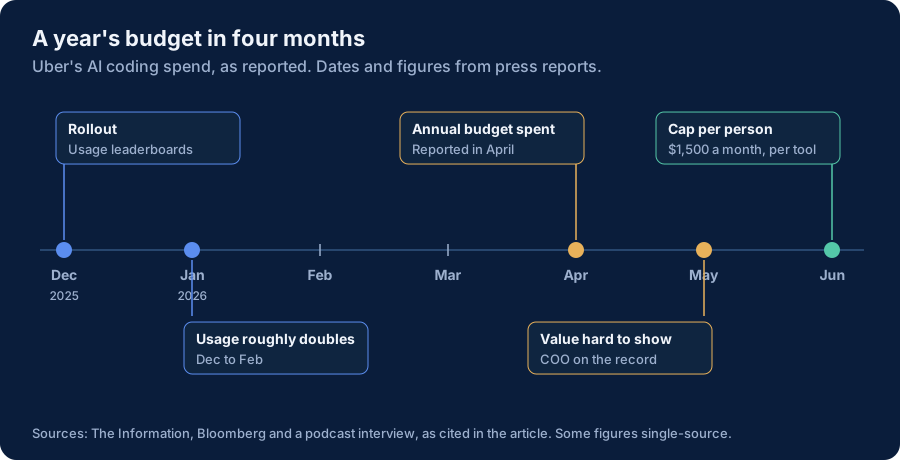
When AI Usage Outruns the Budget: What the Uber Story Teaches About AI Value Management
Uber spent its 2026 AI coding budget in four months and its COO could not show the value. What went wrong, and what AI value management would have changed.
9 minPublished 9 Jun 2026For CFO, CTO
Essay · Cost and pricing
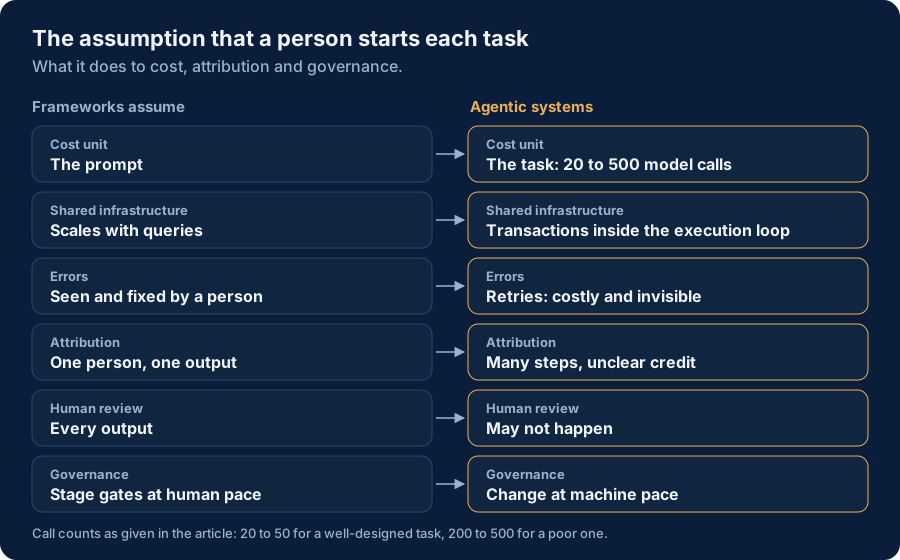
What Agentic AI Changes in AI Economics
Agents break the assumption that a person starts each AI task. What that changes in cost, attribution and governance, and which models still hold.
15 minPublished 4 Jun 2026For CIO, CTO
Guide · Cost and pricing
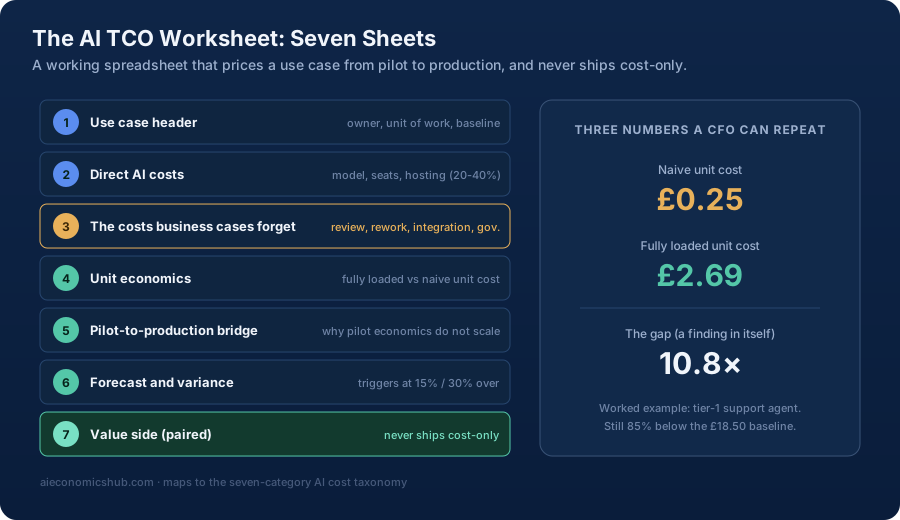
AI TCO Worksheet: The Seven-Sheet Model
A seven-sheet spreadsheet for pricing AI use cases from pilot to production, built for finance and engineering to complete together in an afternoon.
11 minPublished 3 Jun 2026For Finance analyst, platform engineer
Essay · Value and proof
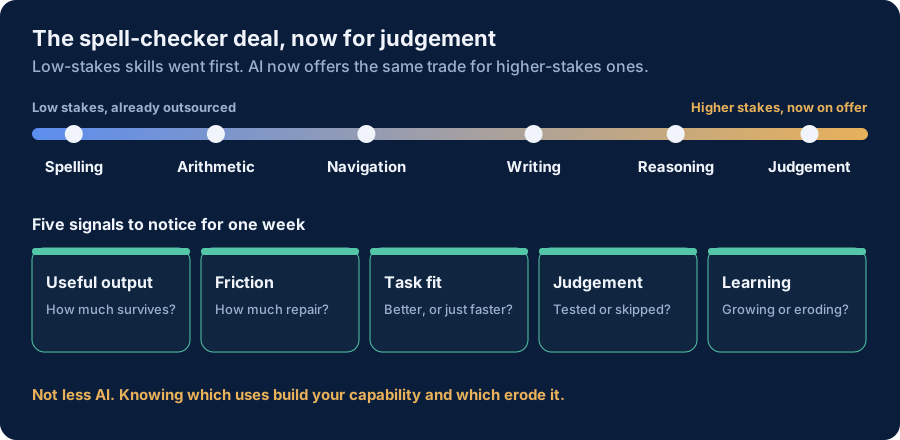
The Spell-Checker for Thinking: Personal AI Accountability for Knowledge Workers
We accepted the spell-checker trade-off without debate. AI now offers the same deal for reasoning and judgement. Whether to accept it deserves thought.
9 minPublished 2 Jun 2026For CIO, HR
Essay · Cost and pricing
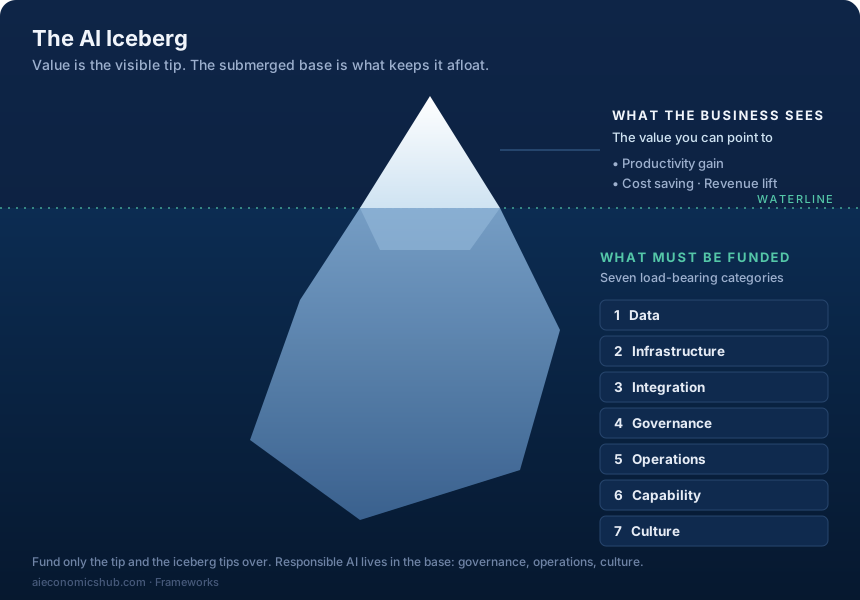
Proportionate AI Governance: Paying for Control Without Consuming the Portfolio
Under-governed AI is costly, and so is over-governed AI. How to size AI governance to each use's risk and autonomy, and spot governance that changes nothing.
11 minPublished 27 May 2026For CFO, risk
Archive
These pieces were published in 2026 but have not been reviewed against sources and are no longer maintained. Several are general guides that the pieces above now cover better. They stay online so existing links work. See the methodology.
- The First 30 Days of AI Value Management
- The Inference Cost Crisis: What Every Enterprise AI Buyer Should Know
- AI Economics in Regulated Industries: Why the Standard Framework Breaks
- Building an AI Business Case That Survives Board Scrutiny
- The Economics of AI Vendor Selection: Lock-in, Pricing Risk, and Exit Costs
- AI Economics for Mid-Market Companies: Why the Enterprise Playbook Doesn't Scale Down
- AI Economics for the Engineering Leader
- What Consulting Partners Need From AI Economics
- The CAIO's First 100 Days: An Economic Governance Playbook
- Where AI TCO Models Fail
- FinOps for Inference-Era Workloads
- Enterprise AI Cost Basics