

Operating Model
Who owns which part of AI economics, and how the parts connect
AI value management is not a new central team. It connects the people who already own parts of the economic chain, from procurement and engineering to finance, product owners and leadership. What is new is the link from consumption to proven outcomes, and the line managers who now create AI demand directly.
In brief
- Nobody owns all of it. Each role owns one part of the chain.
- FinOps, TBM, ITFM and SPM already supply most of the machinery.
- The missing piece is the link from AI use to a measured outcome.
- Line managers now create AI spend without a purchase order.
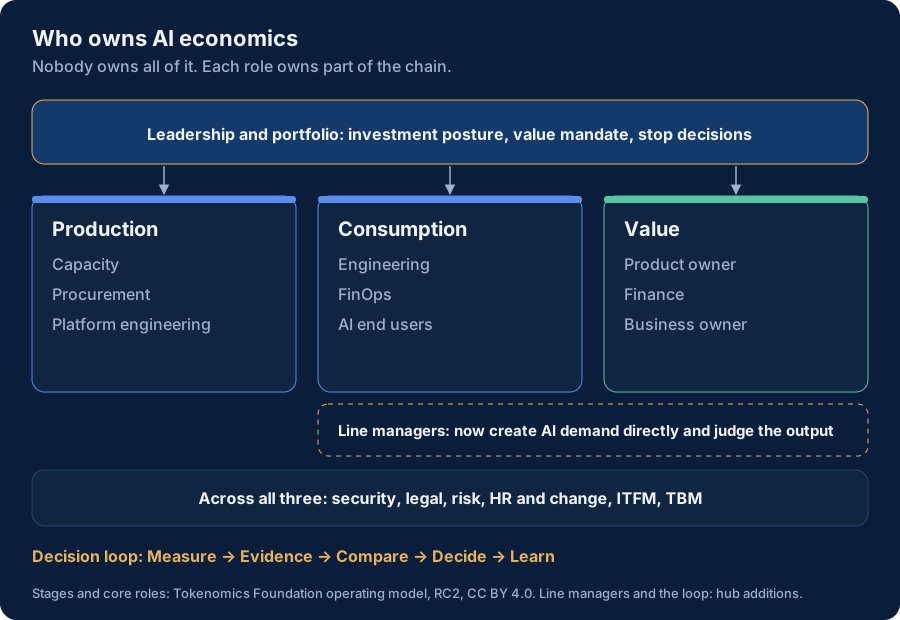
Who owns what
Start here. Who answers for cost, consumption and value, and where demand is now created.
Money and control
Budgets, spend control and the portfolio decisions that follow from them.
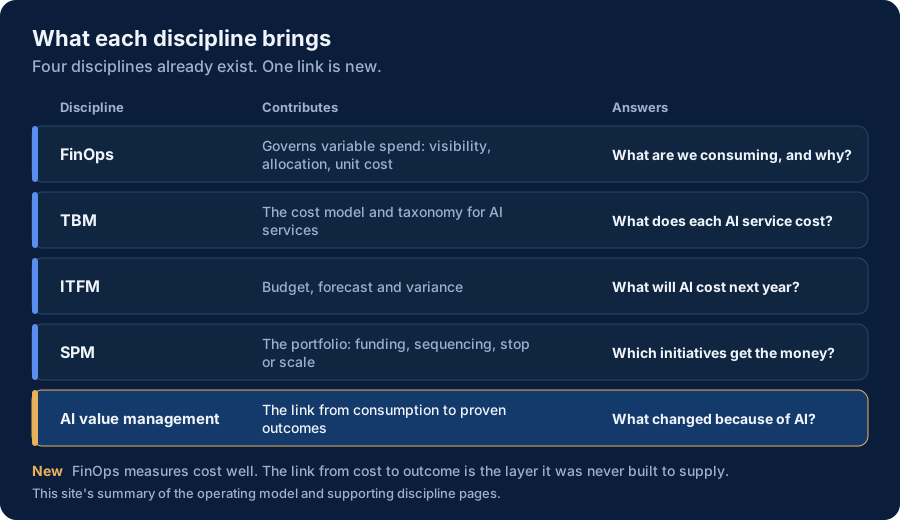
Foundation
The FinOps lineage
What carries over unchanged, and the one thing FinOps was never built to supply.
Budgeting
How to budget for AI
Driver-based forecasting and variance when unit prices fall and total spend rises.
Portfolio
SPM and AI
The portfolio discipline that turns value data into investment decisions.
Finance view
What CFOs should ask of AI ROI claims
The questions that test a business case: complete cost, realistic benefit, and proof standards defined before approval.
People and buying
Adoption and procurement, where most programmes stall.
Supporting disciplines
How TBM, ITFM and the site's maturity models adapt to AI economics.
Domain overview
TBM & AI
How service and portfolio management disciplines adapt to shared AI capability economics.
Domain overview
ITFM & AI
How budgeting, planning, forecasting, allocation, and reporting disciplines adapt to AI.
Signature framework
The Layers of AI Value Management
How usage transparency, output quality, workflow value, delivery alignment, and portfolio strategy fit together.
Signature framework
AI Economics Maturity Model
A maturity model for judging whether the organisation is becoming more governable as AI scales.