

Decision cases
Decision stories, not success stories
Most AI case studies describe wins. These end in a decision. Each follows the same chain: cost, consumption, outcome, evidence, decision. Together they cover all four outcomes: scale, hold, redesign and stop.
All four cases are illustrative. Every organisation and figure is invented, to show the mechanics. They are rows of the sample portfolio in the portfolio review pack, so the numbers reconcile across the site.
Read the cases
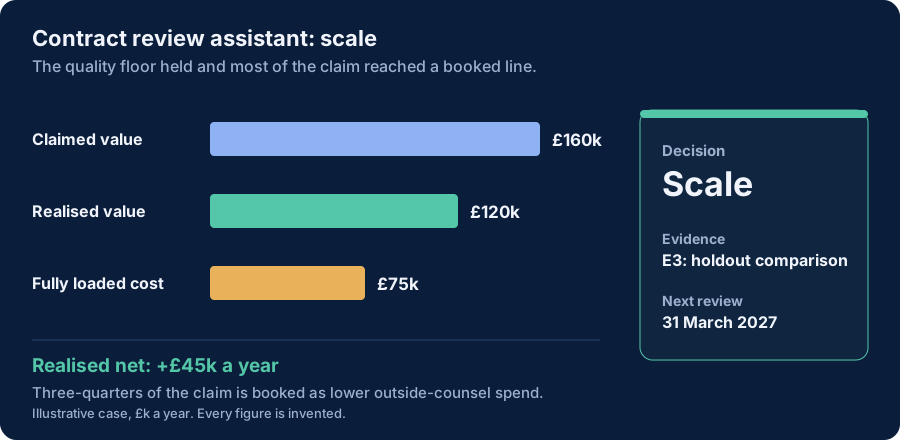 Illustrative · LegalScale: Contract review assistant
A holdout comparison showed the quality floor held and most of the claimed value was booked.
Evidence E3 · Next review: 31 March 2027
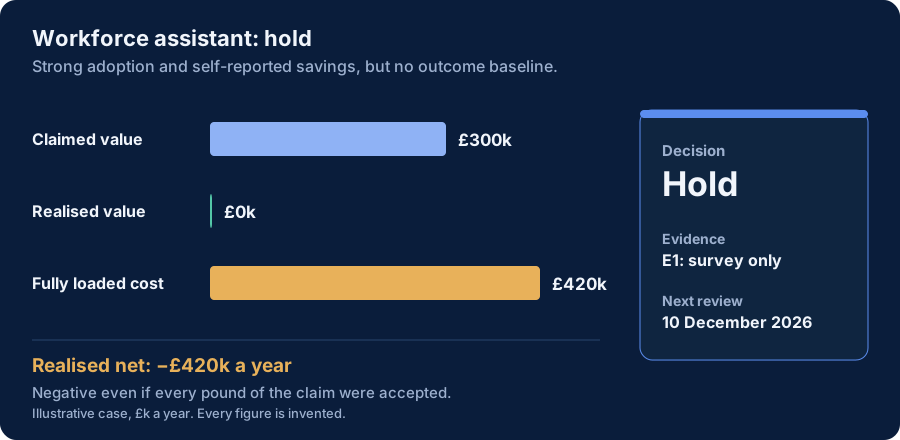 Illustrative · All functionsHold: Workforce assistant
Strong adoption and self-reported savings, but no outcome baseline and nothing booked.
Evidence E1 · Next review: 10 December 2026
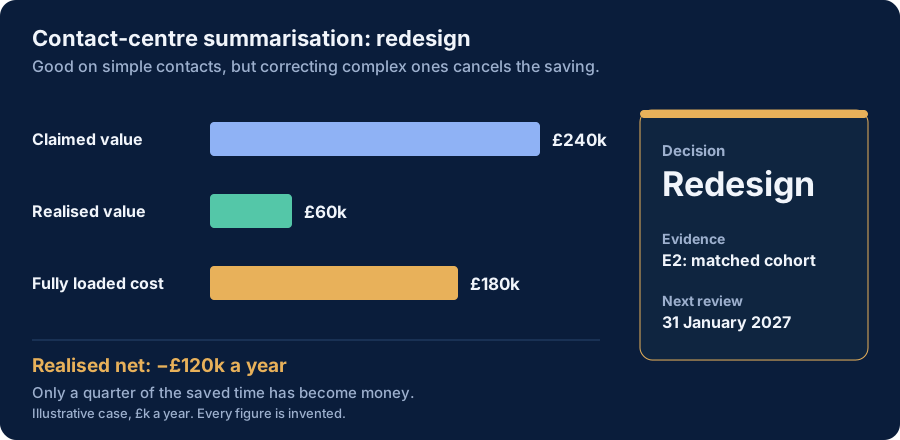 Illustrative · Customer operationsRedesign: Contact-centre summarisation
Helps on simple contacts, but correction time on complex ones cancels most of the saving.
Evidence E2 · Next review: 31 January 2027
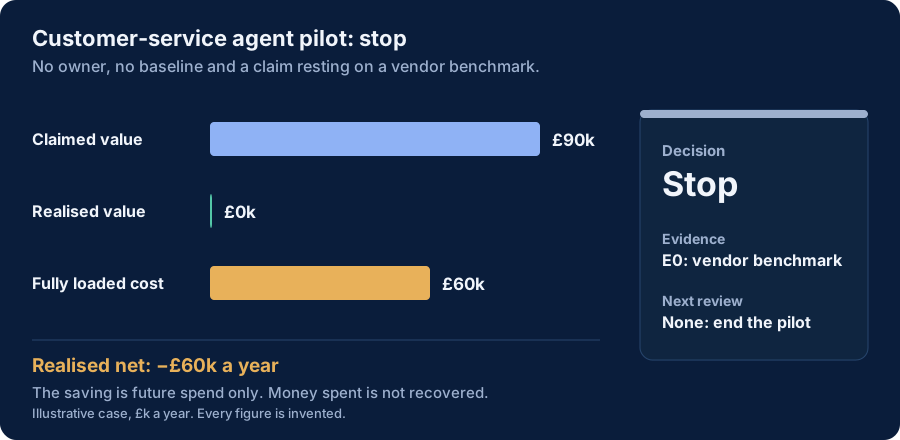 Illustrative · Customer operationsStop: Customer-service agent pilot
No owner, no baseline and a vendor-demo benchmark, with an agent able to act on accounts.
Evidence E0 · Next review: Overdue since 30 September 2026
How the cases are built
Every case has the same parts: executive summary, situation, economic baseline, full cost, consumption and workflow, outcome and quality floor, evidence assessment, net position, decision, and lessons with limitations. Each shows realised value separately from claimed value, and ends with a decision record in the format of the AI Value Ledger.
Case status labels
- Illustrative (in use):
- Synthetic figures used to explain the mechanics. No real organisation.
- Representative:
- Built from common programme patterns, not from one organisation's data.
- Validated:
- Based on programme data that has been reviewed.
- Organisation-supplied:
- Provided and approved by the named organisation.
- Benchmark case:
- Suitable for repeated comparison, with clear scope and limitations.
Only illustrative cases are published today. A case is not relabelled representative or validated until it rests on reviewed data.