

Key takeaways
- Stopping an initiative is a result of good governance. Writing down why it stopped is what makes the next decision better.
- A review separates money already spent from future spend avoided, and records what is reusable.
- It is a proposal, version 0.5, supplied as a Word template.
The decision this helps make
What did we learn, and what should change? Without a record, a stopped initiative is forgotten and the same weaknesses recur: no owner, no baseline, no stop rule. The review is a short, blameless review completed within a few weeks of the decision.
Best for: any initiative above your materiality threshold that has been stopped, or redesigned after underperforming.
Not for: assigning blame, or reopening the decision.
The eight parts
- What it set out to do. The intended outcome, owner, baseline if one existed, and the original business case.
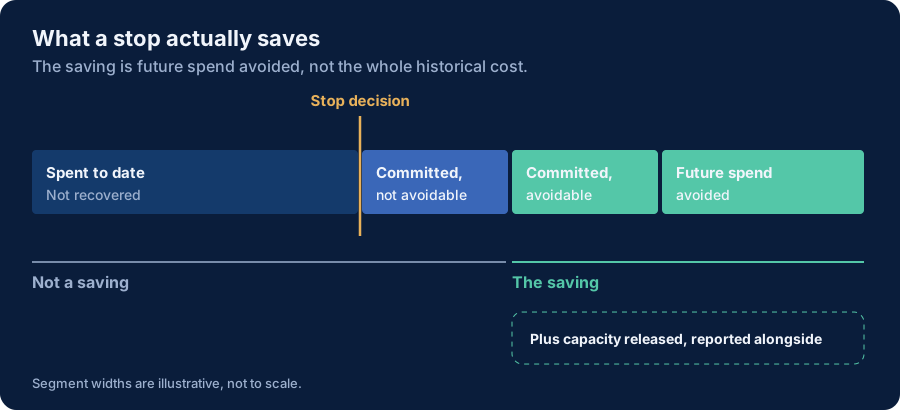
- What it cost. Spent to date, fully loaded; committed and avoidable; committed and not avoidable; future spend avoided; capacity released.
- What happened. Claimed against measured and realised value, and when the signs first appeared.
- Why it stopped. Five questions: was the value case weak or never tested; did cost, verification or rework exceed the saving; was there a named owner, baseline and quality floor; did risk drive the decision; was a stop rule written and used.
- What was learned. About the use case, supplier, data, workflow and the decision process itself.
- What remains reusable. Data, evaluation sets, integrations, contracts, skills and findings, and where they are kept.
- What would need to be true to try again. Owner, baseline, quality floor, an evidence plan matched to the autonomy requested, and economics that clear the bar.
- Actions. Each with an owner and a date.
Counting the savings honestly
Money already spent is not recovered by stopping. The saving from a stop is the future spend avoided, such as an unrenewed licence or released contractors. The template keeps these separate so a stop is not reported as a saving of the whole historical cost. The customer-service agent case shows the same point.
An illustrative extract
This extract is invented, and describes no real organisation.
Why it stopped. The value case was never tested: there was no owner, no baseline and no quality floor, and the only support for the claim was a vendor benchmark (E0). No stop rule had been written, so the overdue review was the first trigger. Reusable. The cleaned knowledge base and the test conversations. To try again. A named outcome owner, a baseline, a quality floor, and an evidence plan that matches the autonomy requested.
Limitations
- A review written by the people who ran the initiative can be defensive. Have someone outside the team review it.
- Not every failure has a single cause. The template asks questions rather than forcing one answer.
- It records lessons. It does not make sure they are used. Assign the actions to a named owner and review them at the next portfolio review.
Status: Proposal, version 0.5. Hub proposals stay below 1.0 until they have survived outside challenge. A proposed operating artefact of this publication, not a standard. Change history: 0.5, 8 October 2026, first release.
Download: AI stopped initiative review, version 0.5, 8 October 2026 (.docx). Square brackets mark text to replace.