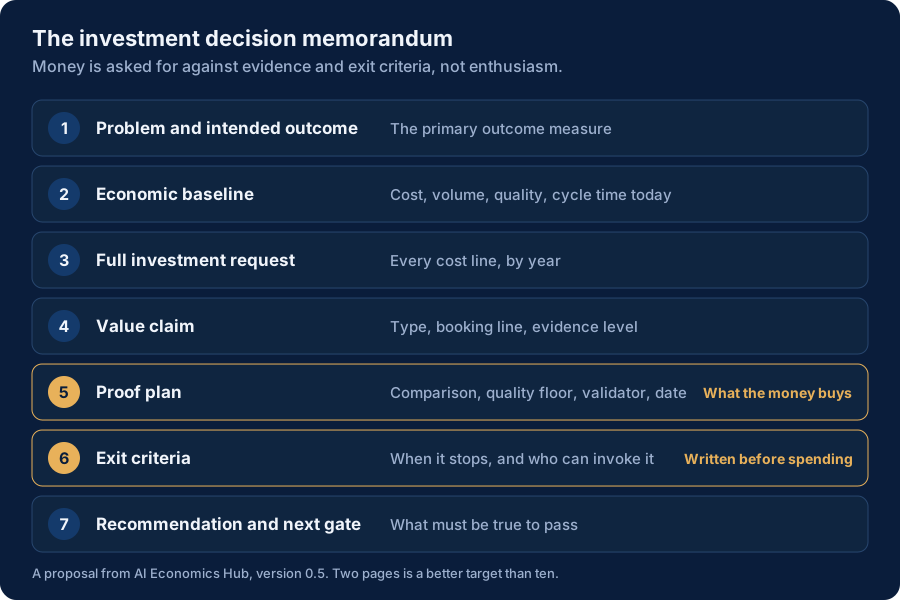

Exit criteria are the counterpart to investment approval criteria, and their absence from most AI governance frameworks is one of the most consequential omissions in enterprise AI economics.
An investment approval process asks: does this case meet our threshold for commitment? An exit criteria process asks: what would we need to observe, by when, to conclude that continued commitment is not warranted? Without the second question answered at the point of approval, there is no mechanism for a disciplined stop decision. The only available pathway is the continuation of investment until either a visible failure forces the issue or the investment is quietly wound down through budget attrition.
Effective exit criteria are specific, pre-agreed, and reviewed at defined intervals. "If performance is unsatisfactory" is not an exit criterion - it is an invitation for indefinite rationalisation. "If adoption has not reached X% of the target user base by [date]" or "if cost per outcome has not declined to within Y% of the business case projection by [date]" are exit criteria that can be evaluated objectively.
The governance principle is that exit criteria should be set at the point of investment approval, when the sponsor still has an incentive to be honest about what success looks like rather than what is achievable given the investment already made. Exit criteria set retrospectively, after an investment is underperforming, are subject to the same political pressures that produce continuation bias in the first place.
For the full treatment of AI initiative exit governance, see When to Stop an AI Initiative.