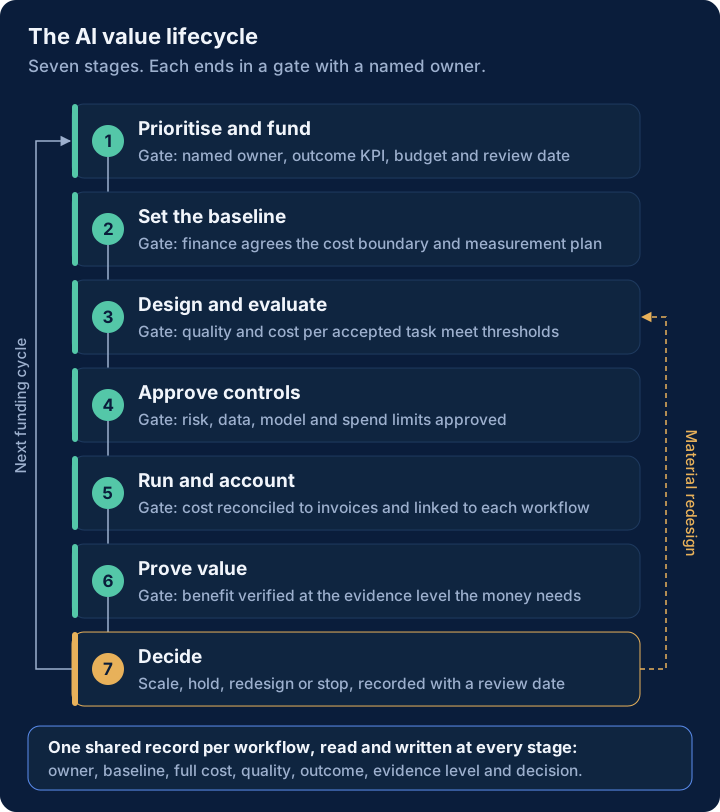

A stage gate is a governance mechanism that prevents automatic continuation of AI investment. It converts a single approval decision (the initial business case) into a sequence of evidence-dependent decisions at defined points in the investment lifecycle.
The typical stage gates in an AI investment process are: experimental stage (initial pilot commitment), limited production (first live deployment at controlled scale), scaled deployment (broad organisational rollout), and sustained operation (ongoing investment in a mature capability). Each transition should require evidence that the previous stage has met its committed targets, not merely that it has concluded.
Without stage gates, two failure modes are common. The first is escalation of commitment - an investment that should be stopped at the pilot stage continues into production because no defined decision point exists at which continuation requires evidence. The second is premature scale - a pilot that shows promising but unverified results is scaled before the value case is established, creating large operational dependencies before the economics are understood.
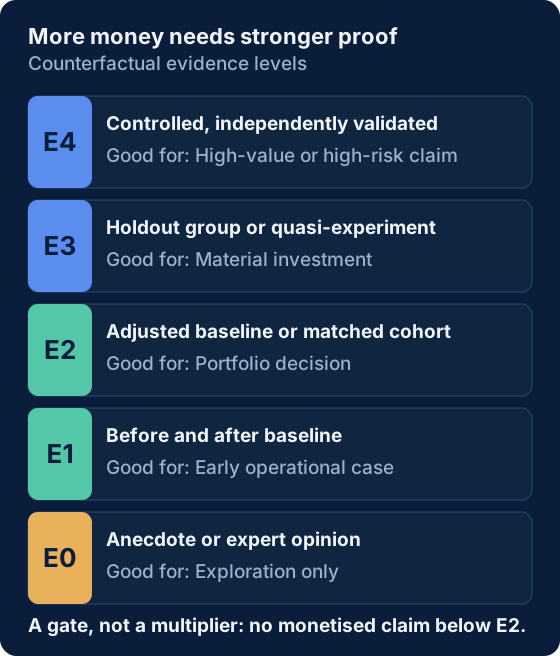
Effective stage gates have three characteristics. They are defined before the investment begins, not after underperformance has occurred. They specify objective evidence requirements rather than subjective assessments. And they have real governance authority - meaning the gate cannot be bypassed through escalation to a sponsor who wants the project to continue regardless of the evidence.
The AI value lifecycle sets out seven gates for a single AI workflow, from funding to a scale, hold, redesign or stop decision, with an owner for each.
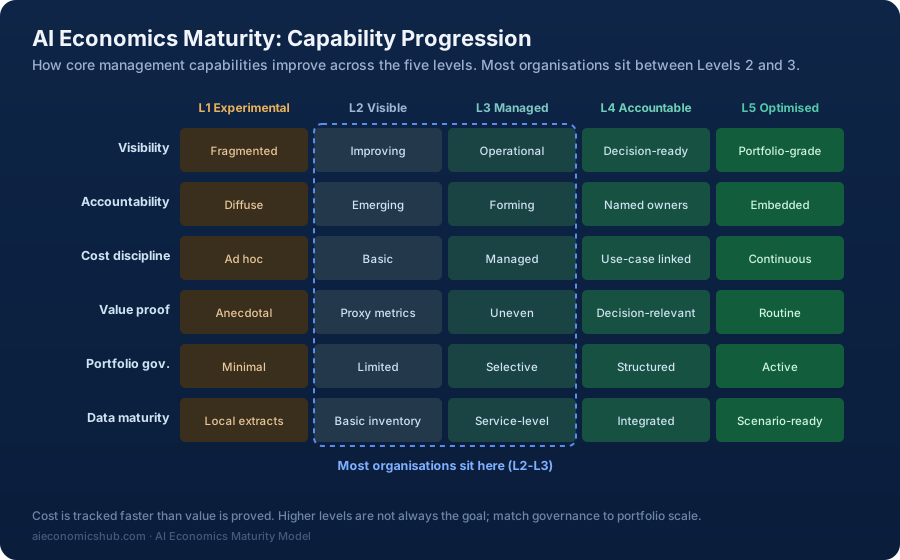
For the maturity model context of stage gate governance, see the AI Economics Maturity Model.