Fine-tuning changes a model's weights using examples from the organisation's own work. Its costs come in three parts:
- The tuning run, a one-off charge for compute, plus the work of preparing and labelling the data.
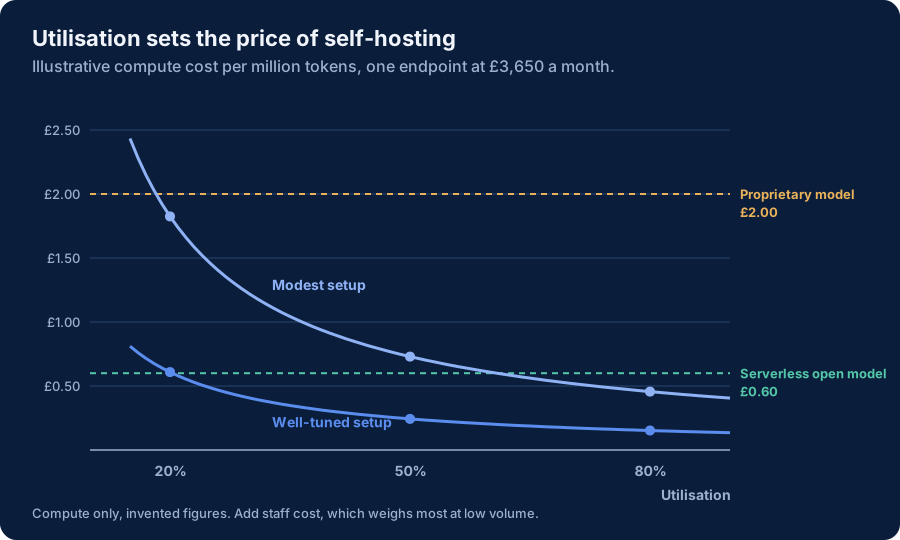
- Hosting, which some providers price above the base model, or which requires dedicated capacity.
- Upkeep: evaluating the tuned model, and repeating the exercise when the base model is updated or the task changes.
The economic case is usually one of two:
- A smaller model that clears the quality floor. If tuning lets a cheaper model do work that would otherwise need a frontier model, the saving per call can repay the tuning at high volume.
- Behaviour that prompts cannot reliably produce, such as a strict output format or domain style, where the alternative is costly review and rework.
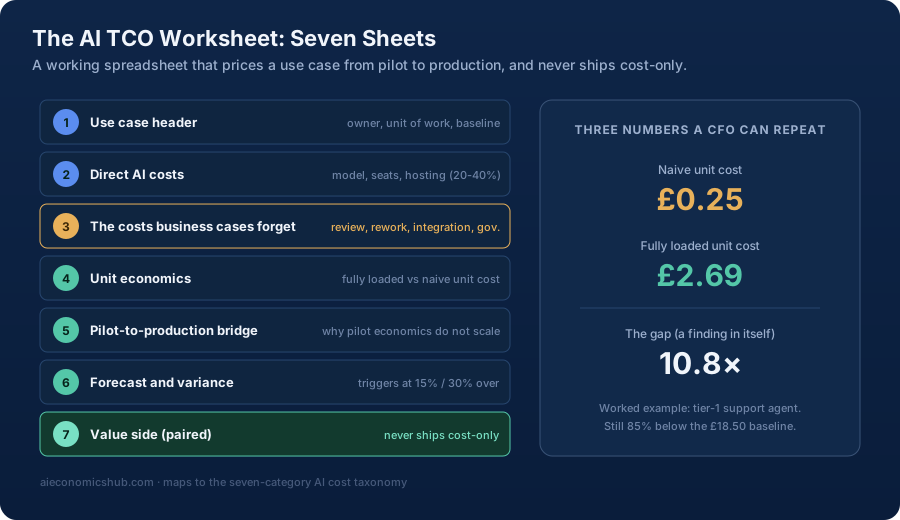
Where the need is for current or organisation-specific facts, retrieval-augmented generation is usually cheaper and easier to keep up to date than tuning. Compare the options on cost per successful outcome, including review time, over the expected life of the model. See The Economics of Model Selection.