Training a large model from scratch is expensive and done by a small number of providers. They recover that investment through the prices they charge for using the model, so for an enterprise buyer the training cost is already inside the token price or the subscription.
What an enterprise pays for directly is usually one of three things:
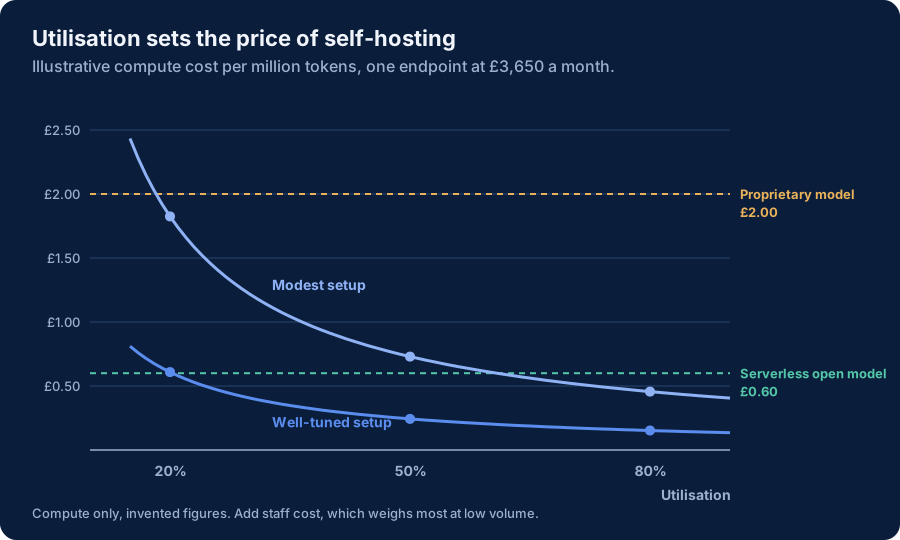
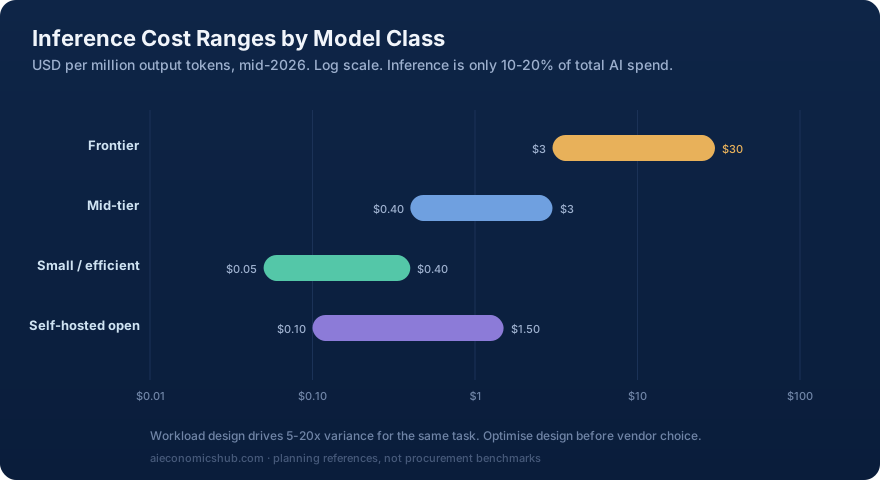
- Inference: running the model every time it is used. This cost recurs and grows with adoption, and over the life of a service it usually exceeds any one-off cost.
- Adaptation: fine-tuning or retrieval set-up so a general model works on the organisation's data. Smaller and more frequent than training.
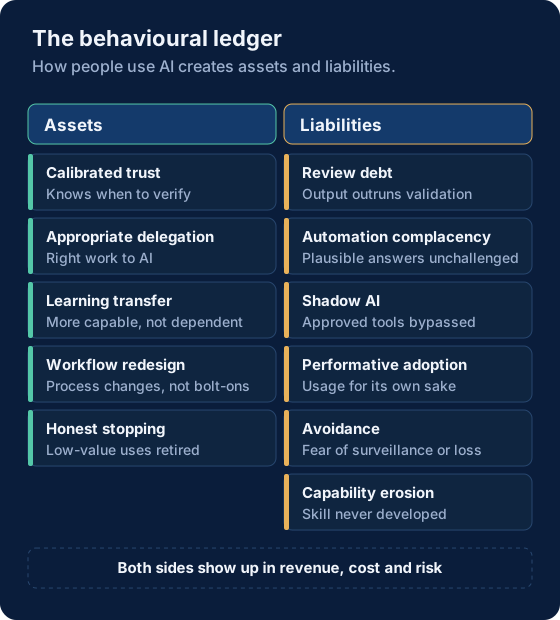
- Operation: evaluation, monitoring, review and governance once the service is live.
Organisations that do train their own models, for reasons of sovereignty, specialisation or competitive position, should treat training as a capital decision: amortise it over the model's expected useful life, which is often short because better base models keep arriving, and include the cost of retraining.
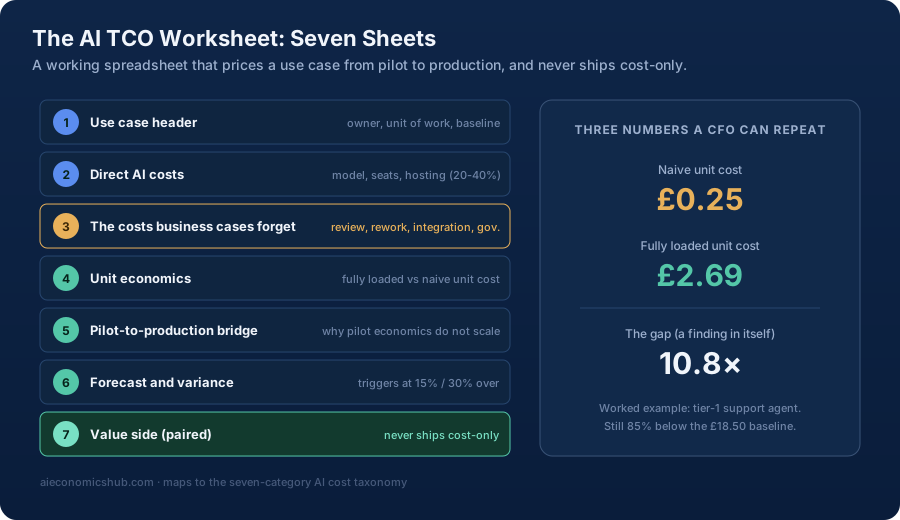
For the full cost picture, see the AI TCO Framework.