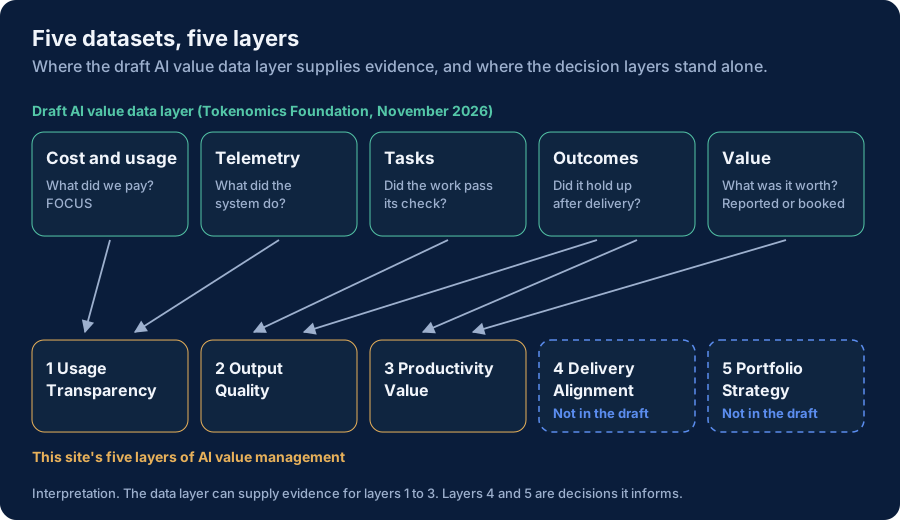
Layer 2 of AI value management: whether AI is producing work that can be trusted, used, and improved, judged by useful and discarded output, review burden, model fit and quality risk rather than call volume.
Why it matters
A productivity claim built on output nobody uses is not a claim. This layer is where leaders decide to route models, tune prompts, strengthen evaluation, set human review thresholds and stop low-quality use cases.
How it is measured
Starting measures in the KPI library include Token Efficiency Ratio (tokens in accepted output against all tokens consumed), Coding-Agent Cost per Merged Change and Model Routing Efficiency. The library is thinner here than at other layers, so most organisations add workflow-specific acceptance and rework measures. Owners are usually AI operations, engineering and risk.
Output quality is the second of the five layers of AI value management. Organisations that
measure portfolio strategy before establishing output quality end up making investment decisions on adoption stories rather
than outcome evidence.
The quality floor is the practical test at this layer: the standard an output must meet to count
at all. The verification cost of checking output belongs in the cost of the use case, not
outside it.