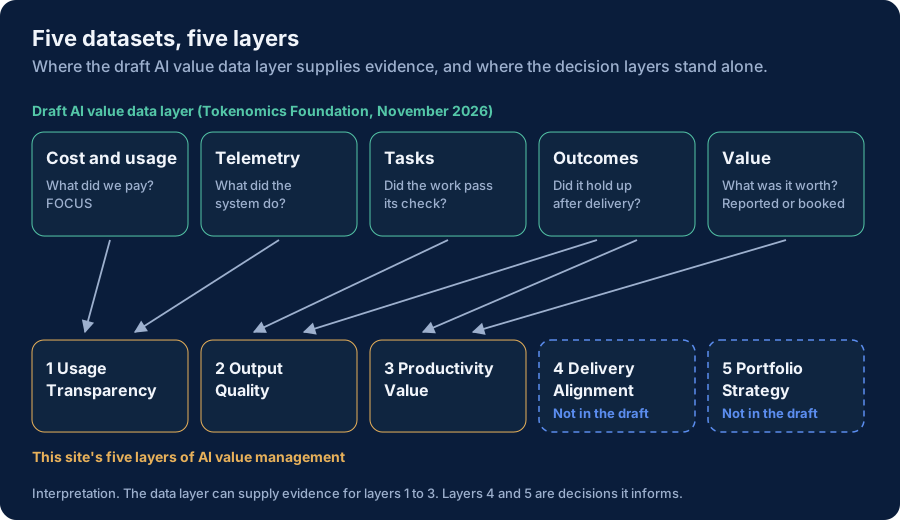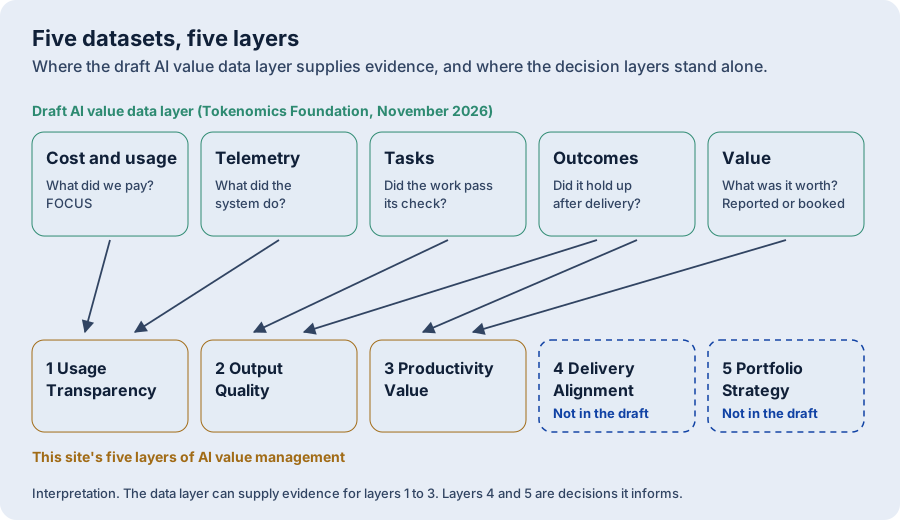

The term comes from the Tokenomics Foundation's draft AI value data layer proposal (Shawn Alpay, 5 November 2026, CC BY 4.0). The proposal is a draft, not an adopted standard.
Scrap rate is not the same as attribution coverage. Scrap rate asks how much of the bill was wasted in production. Attribution coverage asks how much of the bill is linked to a baseline, an owner and evidence of change. A workload can have low scrap and no evidence of value, because every task passes and nobody measured the outcome, or high scrap and full coverage. Only the part of scrap that cannot be tied to a task overlaps with unattributed spend. Report the two side by side.
Scrap rate sits in Layer 2, Output Quality, of this site's five layers. A rising scrap rate is a prompt to look at routing, retries, loop limits and the quality check itself before cutting the budget.